Monday, 21 December
Advent Week Four: Promise Taking Flesh
Morning
John 5:30–47 Berean Standard Bible
30I can do nothing by Myself; I judge only as I hear. And My judgment is just, because I do not seek My own will, but the will of Him who sent Me.
31If I testify about Myself, My testimony is not valid. 32There is another who testifies about Me, and I know that His testimony about Me is valid.
33You have sent to John, and he has testified to the truth. 34Even though I do not accept human testimony, I say these things so that you may be saved.
35John was a lamp that burned and gave light, and you were willing for a season to bask in his light. 36But I have testimony more substantial than that of John. For the works that the Father has given Me to accomplish — the very works I am doing — testify about Me that the Father has sent Me. 37And the Father who sent Me has Himself testified about Me. You have never heard His voice nor seen His form, 38nor does His word abide in you, because you do not believe the One He sent.
39You pore over the Scriptures because you presume that by them you possess eternal life. These are the very words that testify about Me, 40yet you refuse to come to Me to have life.
41I do not accept glory from men, 42but I know you, that you do not have the love of God within you. 43I have come in My Father’s name, and you have not received Me; but if someone else comes in his own name, you will receive him. 44How can you believe if you accept glory from one another, yet do not seek the glory that comes from the only God?
45Do not think that I will accuse you before the Father. Your accuser is Moses, in whom you have put your hope. 46If you had believed Moses, you would believe Me, because he wrote about Me. 47But since you do not believe what he wrote, how will you believe what I say?”
John 5:30-47 begins with a question of testimony. Jesus names John, his own works, the Father, and the Scriptures as witnesses to him. The witnesses gather around one claim: the Father sent him. Yet the people who search the Scriptures for life refuse to come to the one those Scriptures testify about. As you enter the day, notice how a search for truth can turn into a way of keeping Jesus at a distance.
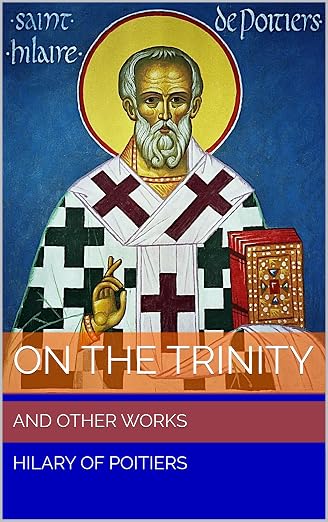
Hilary writes in On the Trinity, “The works of Christ are themselves the testimony of God about Him.” Jesus points to the works he is doing, not as impressive deeds to admire from afar, but as evidence of the Father’s action. The works show who sent him. His hearers have seen signs of that testimony and still judge by other measures: whose approval counts, whose glory they seek, and whether they will receive the one who comes in the Father’s name.
Then Jesus turns to Scripture. They pore over it because they expect to find eternal life there, but reading has not brought them to him. Their knowledge has become a claim they possess, while the living testimony stands before them. That warning reaches anyone who opens the Bible today. You may know where to find a passage and what it has meant to you before. Will you let it point beyond your own understanding and lead you to Christ? Read with attention to the person Scripture reveals.
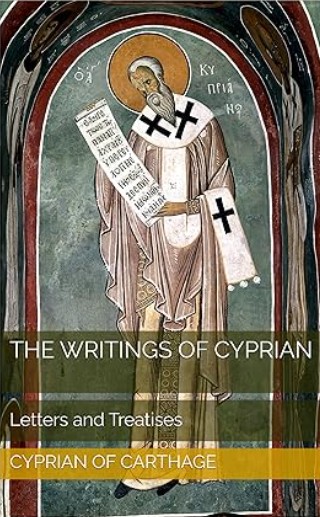
Cyprian describes the promise in Treatise XII: “That another prophet like Moses was promised—one who would bring a new covenant and who should be listened to above all.” John’s scene makes that promise severe. Moses, in whom the hearers place their hope, becomes their accuser, because his writings point to Jesus and they will not believe them. The very authority they rely on testifies against their refusal. Scripture’s testimony is no shelter for a closed heart.
So take up the Bible this morning with the passage’s direction in view. Follow the testimony through the works, the Father, and Moses’ writings; let it bring you to the one who gives life. The accuser is Moses, the very one they trusted. Read his words as testimony to Christ, and come to the one to whom they point.
Evening
Luke 1:1–25 Berean Standard Bible
1Many have undertaken to compose an account of the things that have been fulfilled among us, 2just as they were handed down to us by the initial eyewitnesses and servants of the word. 3Therefore, having carefully investigated everything from the beginning, it seemed good also to me to write an orderly account for you, most excellent Theophilus, 4so that you may know the certainty of the things you have been taught.
5In the time of Herod king of Judea there was a priest named Zechariah, who belonged to the priestly division of Abijah, and whose wife Elizabeth was a descendant of Aaron. 6Both of them were righteous in the sight of God, walking blamelessly in all the commandments and decrees of the Lord. 7But they had no children, because Elizabeth was barren, and they were both well along in years.
8One day while Zechariah’s division was on duty and he was serving as priest before God, 9he was chosen by lot, according to the custom of the priesthood, to enter the temple of the Lord and burn incense. 10And at the hour of the incense offering, the whole congregation was praying outside.
11Just then an angel of the Lord appeared to Zechariah, standing at the right side of the altar of incense. 12When Zechariah saw him, he was startled and gripped with fear.
13But the angel said to him, “Do not be afraid, Zechariah, because your prayer has been heard. Your wife Elizabeth will bear you a son, and you are to give him the name John. 14He will be a joy and delight to you, and many will rejoice at his birth, 15for he will be great in the sight of the Lord. He shall never take wine or strong drink, and he will be filled with the Holy Spirit even from his mother’s womb. 16Many of the sons of Israel he will turn back to the Lord their God. 17And he will go on before the Lord in the spirit and power of Elijah, to turn the hearts of the fathers to their children and the disobedient to the wisdom of the righteous — to make ready a people prepared for the Lord.”
18“How can I be sure of this?” Zechariah asked the angel. “I am an old man, and my wife is well along in years.”
19“I am Gabriel,” replied the angel. “I stand in the presence of God, and I have been sent to speak to you and to bring you this good news. 20And now you will be silent and unable to speak until the day this comes to pass, because you did not believe my words, which will be fulfilled at their proper time.”
21Meanwhile, the people were waiting for Zechariah and wondering why he took so long in the temple. 22When he came out and was unable to speak to them, they realized he had seen a vision in the temple. He kept making signs to them but remained unable to speak. 23And when the days of his service were complete, he returned home.
24After these days, his wife Elizabeth became pregnant and for five months remained in seclusion. She declared, 25“The Lord has done this for me. In these days He has shown me favor and taken away my disgrace among the people.”
Luke opens with a careful account meant to steady Theophilus in what he has been taught. Then he brings us to a temple, where a priest serves while the people pray outside. Zechariah and Elizabeth are righteous, blameless, and old; they have lived for years without the child they longed for. The angel’s announcement reaches into that long waiting with a promise larger than the household: their son will turn many to God and prepare a people for the Lord.
The promise comes at the incense altar, in the middle of worship. Zechariah has come to perform his duty; the people wait beyond the temple doors. When Gabriel speaks, Zechariah asks how he can be sure. His age and Elizabeth’s age are plain facts, yet the angel has already told him that his prayer has been heard. The years of waiting have become the measure by which Zechariah judges the news. Even in the place where the people pray, an answer can sound beyond belief.
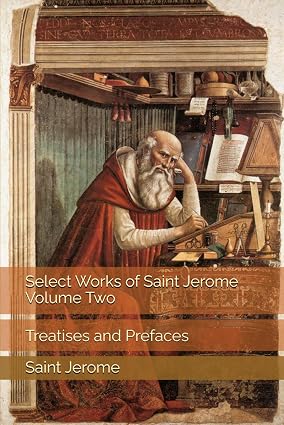
Jerome names the difficulty directly in Against the Pelagians: “Even the apostles showed doubt and stubbornness of heart.” He goes on to name Zechariah: “Even Zacharias did not believe God’s message.” Jerome places the priest among people who falter when faced with what God says. Luke’s account makes that failure sharper by first calling the couple blameless. Years of faithfulness have not made Zechariah ready to trust this word. Gabriel answers his question with a silence that lasts until the promise comes to pass. The priest who entered the sanctuary to offer incense leaves unable to speak to the waiting crowd.
Outside, the people wonder at his delay. Zechariah can only make signs; the message moves forward without his voice. He completes his days of service and returns home. Elizabeth conceives, then withdraws for five months. Her words at the end of the scene are spare: the Lord has acted for her. The waiting has not been erased, and Zechariah’s silence remains part of the story. Yet the child is coming, and the promise is proceeding at its proper time. As this day closes, is there a prayer you have stopped expecting God to answer?
Works Cited
A language model (gpt-6-luna) wrote this prose in repeated rounds with human review and direction, from passages found in Appian Way Press's editions of early Christian writings. Rick Brannan then reviewed it. Bible text: Berean Standard Bible. How this devotional was made, and how you may share it.