Tuesday, 22 December
Advent Week Four: Promise Taking Flesh
Morning
Luke 1:26–38 Berean Standard Bible
26In the sixth month, God sent the angel Gabriel to a town in Galilee called Nazareth, 27to a virgin pledged in marriage to a man named Joseph, who was of the house of David. And the virgin’s name was Mary. 28The angel appeared to her and said, “Greetings, you who are highly favored! The Lord is with you.”
29Mary was greatly troubled at his words and wondered what kind of greeting this might be. 30So the angel told her, “Do not be afraid, Mary, for you have found favor with God. 31Behold, you will conceive and give birth to a son, and you are to give Him the name Jesus. 32He will be great and will be called the Son of the Most High. The Lord God will give Him the throne of His father David, 33and He will reign over the house of Jacob forever. His kingdom will never end!”
34“How can this be,” Mary asked the angel, “since I am a virgin?”
35The angel replied, “The Holy Spirit will come upon you, and the power of the Most High will overshadow you. So the Holy One to be born will be called the Son of God. 36Look, even Elizabeth your relative has conceived a son in her old age, and she who was called barren is in her sixth month. 37For no word from God will ever fail.”
38“I am the Lord’s servant,” Mary answered. “May it happen to me according to your word.” Then the angel left her.
Gabriel’s greeting unsettles Mary before it explains anything. She is troubled and wonders what kind of greeting this could be. Then comes the promise: a son, a throne, a kingdom without end. The words reach far beyond the life she can see ahead. Mary asks how this can happen. Her question belongs inside her answer; she listens, asks, and receives the angel’s reply.
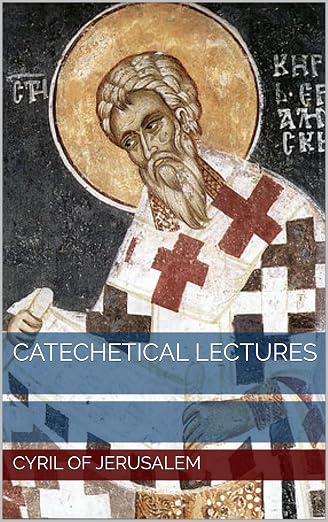
Cyril of Jerusalem writes in Catechetical Lectures, “It is the one and same Holy Spirit who spoke the divine Scriptures in both the Old and the New Testament.” He continues, “This is the Holy Ghost who came upon the Holy Virgin Mary.” The promise to Mary is joined to the Spirit’s long witness in Scripture. What Gabriel announces is new in its fulfillment, yet it rests on the faithfulness of the God whose word has been speaking all along.
Mary still cannot see the child, much less the kingdom Gabriel describes. She has heard that the Holy Spirit will come upon her and that the power of the Most High will overshadow her. The angel also points to Elizabeth, whose pregnancy gives Mary a sign of God’s work. These words answer her question without making the future small or predictable. The calling remains unforeseen; the promise gives her ground to receive it.
Then Mary names herself as the Lord’s servant and consents to what has been spoken. Her yes is free and clear-eyed: she has asked how, heard the answer, and now entrusts herself to a word whose fulfillment she cannot yet see. The angel’s assurance is that no word from God will fail. Mary’s consent does not make that word certain; it is her response to the One who speaks it.
As you begin this day, notice one clear responsibility that has come to you, perhaps a conversation you have been avoiding or a task someone is counting on you to do. You may not know what it will lead to. Ask for the help you need, as Mary did, then answer faithfully to what is in front of you. Her morning began with a troubling greeting and a question; it moved toward consent because she trusted the God whose promise reached beyond what she could see.
Evening
1 Samuel 2:1b–10 Berean Standard Bible
1At that time Hannah prayed:
“My heart rejoices in the LORD;
my horn is exalted in the LORD.
My mouth speaks boldly against my enemies,
for I rejoice in Your salvation.
2There is no one holy like the LORD.
Indeed, there is no one besides You!
And there is no Rock like our God.
3Do not boast so proudly,
or let arrogance come from your mouth,
for the LORD is a God who knows,
and by Him actions are weighed.
4The bows of the mighty are broken,
but the feeble are equipped with strength.
5The well-fed hire themselves out for food,
but the starving hunger no more.
The barren woman gives birth to seven,
but she who has many sons pines away.
6The LORD brings death and gives life;
He brings down to Sheol and raises up.
7The LORD sends poverty and wealth;
He humbles and He exalts.
8He raises the poor from the dust
and lifts the needy from the ash heap.
He seats them among princes
and bestows on them a throne of honor.
For the foundations of the earth are the LORD’s,
and upon them He has set the world.
9He guards the steps of His faithful ones,
but the wicked perish in darkness;
for by his own strength shall no man prevail.
10Those who oppose the LORD will be shattered.
He will thunder from heaven against them.
The LORD will judge the ends of the earth
and will give power to His king.
He will exalt the horn of His anointed.”
At the close of the day, Hannah’s song asks what strength can secure. It begins in her joy, then widens until it speaks of the mighty, the hungry, the barren, the poor, and the needy. In 1 Samuel 2:1b-10, each reversal rests on the same truth: the Lord weighs human deeds and rules over life and death. The song gives thanks, yet it also warns. The proud have reason to tremble before the God who brings low as well as raises.
Hannah names the broken bows of the mighty and the strength given to the feeble. Then the images sharpen: the Lord brings down to Sheol and raises up; he sends poverty and wealth. These are not small turns in fortune. The Lord holds power over the ends of life and over the place a person occupies in the world. At the end of a day, you may remember a moment when you relied on your skill, your status, or your plans to keep control. Hannah’s song sets that confidence under judgment.
Augustine reads the reversal as a warning against self-reliance. In The City of God, he writes, “The bow is made weak—that is, the plans of those who think they are powerful enough to obey God’s commandments by their own strength without God’s help.” He then describes the weak as those who cry to God for mercy. Augustine presses the song toward the heart: strength can become a plan to manage even obedience on our own. The feeble receive strength as they depend on God, not as they discover a stronger way to stand alone.
The song’s poor rise from dust and ash to sit among princes, while the wicked perish in darkness. Hannah does not smooth these judgments into a general message that everyone will fare well. God guards the steps of his faithful ones; those who oppose him will be shattered. The foundations of the earth belong to him. That claim leaves no corner of life outside his rule, and no human rank secure against his judgment. The lowly are lifted by his strength, while the mighty cannot preserve themselves by theirs.
Hannah ends by looking beyond her own joy to the Lord’s king and anointed one. The song has moved from one woman’s rejoicing to the hope of a ruler empowered by God, and its final measure remains clear: no one prevails by personal strength. As you look back on this day, where did you rely on your own strength as though it could secure what belongs to God?
Works Cited

A language model (gpt-6-luna) wrote this prose in repeated rounds with human review and direction, from passages found in Appian Way Press's editions of early Christian writings. Rick Brannan then reviewed it. Bible text: Berean Standard Bible. How this devotional was made, and how you may share it.