Saturday, 5 December
Advent Week One: Keeping Watch in Hope
Morning
1 Thessalonians 4:13–18 Berean Standard Bible
13Brothers, we do not want you to be uninformed about those who sleep in death, so that you will not grieve like the rest, who are without hope. 14For since we believe that Jesus died and rose again, we also believe that God will bring with Jesus those who have fallen asleep in Him.
15By the word of the Lord, we declare to you that we who are alive and remain until the coming of the Lord will by no means precede those who have fallen asleep. 16For the Lord Himself will descend from heaven with a loud command, with the voice of an archangel, and with the trumpet of God, and the dead in Christ will be the first to rise. 17After that, we who are alive and remain will be caught up together with them in the clouds to meet the Lord in the air. And so we will always be with the Lord.
18Therefore encourage one another with these words.
In 1 Thessalonians 4:13-18, Paul answers a painful question: what happens to believers who die before the Lord comes? The Thessalonians are waiting, and death has reached their community while they wait. Paul gives them a sequence to hold on to: the Lord descends, the dead in Christ rise first, and the living are gathered with them. The question of who gets there first is answered plainly. Those who have died are not left behind.
Paul speaks directly about grief. He does not ask the church to feel nothing; he distinguishes their grief from grief without hope. The difference rests on what God has done in Jesus: Jesus died and rose again. That fact does not erase the empty place at a table or the ache of a funeral. It gives the grieving a future to look toward, even while the loss remains present.
Theodoret writes, “Now, let the separation sadden us to some extent—I am not asking for anything against human nature—but let us not mourn as if over a corpse.” His words allow sorrow its proper weight. Separation hurts; faith does not require anyone to call it easy. Yet Paul’s picture carries the mourners beyond the grave: at the Lord’s command, the dead rise. Grief can speak honestly about absence while still listening for that command.
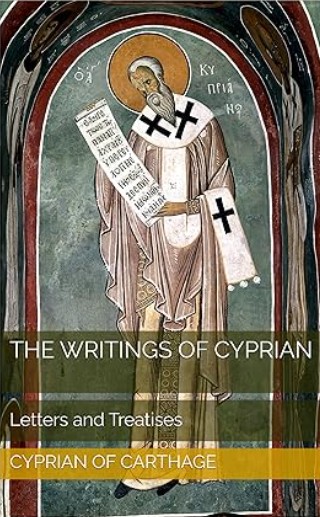
Cyprian writes, “Meanwhile, when we die, we are crossing over to immortality through death; eternal life cannot come unless we leave this life behind. Death is not an end but a transition, and after this journey through time, it is a passage into eternity.” The image of crossing does not make the shore we leave less dear. It reminds the living that death is a passage under God’s care, and that Christ has gone through death and risen. The believer who dies belongs to him in life and in death.
Paul ends by telling the church to encourage one another with these words. That is something to do today. If someone you know is mourning, contact them; let them speak of the person they miss, then tell them the hope Paul gives: the dead in Christ rise first, and all are gathered to be with the Lord. Do not rush their sorrow. Stay with them, and give them words that keep the dead within the promise.
Evening
Jude 17–25 Berean Standard Bible
17But you, beloved, remember what was foretold by the apostles of our Lord Jesus Christ 18when they said to you, “In the last times there will be scoffers who will follow after their own ungodly desires.” 19These are the ones who cause divisions, who are worldly and devoid of the Spirit.
20But you, beloved, by building yourselves up in your most holy faith and praying in the Holy Spirit, 21keep yourselves in the love of God as you await the mercy of our Lord Jesus Christ to bring you eternal life.
22And indeed, have mercy on those who doubt; 23save others by snatching them from the fire; and to still others show mercy tempered with fear, hating even the clothing stained by the flesh.
24Now to Him who is able to keep you from stumbling and to present you unblemished in His glorious presence, with great joy — 25to the only God our Savior be glory, majesty, dominion, and authority through Jesus Christ our Lord before all time, and now, and for all eternity.
Amen.
At evening, Jude leaves the church between two voices. Scoffers follow their own desires and divide the community; the beloved are told to build one another up and wait for Christ’s mercy. The delay makes the scoffers’ confidence sound persuasive. Looking back over the day, where did impatience or suspicion begin to pull people apart? Jude’s answer is not a timetable. It is a way of keeping faith while the waiting continues.
He tells the church to keep itself in God’s love, praying in the Holy Spirit and building on its most holy faith. Then he turns their attention outward: have mercy on those who doubt. Doubt does not make a person an enemy to be cast aside. Jude calls for mercy, even as he warns that some must be rescued from danger and approached with care. Staying awake, here, means noticing when someone wavers and moving toward that person with compassion rather than contempt.
Hilary writes, “He places no time limit on our hope. He calls us to keep our faithful expectation going without end.” In Homilies on the Psalms, he is speaking of hope in the Lord, held without a deadline. That is a steadying word for an evening when the wait still feels long. Jude’s church cannot make Christ’s coming arrive sooner. It can keep praying, keep building up the faithful, and keep showing mercy to the person whose confidence has faltered.
That mercy rests on God’s work, not on our ability to keep everyone steady. Augustine writes, “He works in people both the beginning and the completion of faith in Jesus—the same one who made the man Jesus the beginner and finisher of faith.” Jude’s closing praise turns the church toward the one able to keep it from stumbling. The church must take doubt seriously and act with care; still, the wavering person’s life is held by God, whose power reaches from the first stirrings of faith to its completion.
So let the day’s divisions be brought before the God who keeps. The scoffer’s contempt is serious, and a doubter’s struggle deserves mercy. You do not have to decide that someone has slipped beyond God’s reach. Whom have you begun to give up on, and can you entrust that person to the one who is able to keep you?
Works Cited



A language model (gpt-6-luna) wrote this prose in repeated rounds with human review and direction, from passages found in Appian Way Press's editions of early Christian writings. Rick Brannan then reviewed it. Bible text: Berean Standard Bible. How this devotional was made, and how you may share it.