Monday, 7 December
Advent Week Two: Make a Way for the Coming King
Morning
Psalm 25 Berean Standard Bible
1Of David.
To You, O LORD, I lift up my soul;
2in You, my God, I trust.
Do not let me be put to shame;
do not let my enemies exult over me.
3Surely none who wait for You will be put to shame;
but those who engage in treachery without cause will be disgraced.
4Show me Your ways, O LORD;
teach me Your paths.
5Guide me in Your truth and teach me,
for You are the God of my salvation;
all day long I wait for You.
6Remember, O LORD, Your compassion and loving devotion,
for they are from age to age.
7Remember not the sins of my youth,
nor my rebellious acts;
remember me according to Your loving devotion,
because of Your goodness, O LORD.
8Good and upright is the LORD;
therefore He shows sinners the way.
9He guides the humble in what is right
and teaches them His way.
10All the LORD’s ways are loving and faithful
to those who keep His covenant and His decrees.
11For the sake of Your name, O LORD,
forgive my iniquity, for it is great.
12Who is the man who fears the LORD?
He will instruct him in the path chosen for him.
13His soul will dwell in prosperity,
and his descendants will inherit the land.
14The LORD confides in those who fear Him,
and reveals His covenant to them.
15My eyes are always on the LORD,
for He will free my feet from the mesh.
16Turn to me and be gracious,
for I am lonely and afflicted.
17The troubles of my heart increase;
free me from my distress.
18Consider my affliction and trouble,
and take away all my sins.
19Consider my enemies, for they are many,
and they hate me with vicious hatred.
20Guard my soul and deliver me;
let me not be put to shame,
for I take refuge in You.
21May integrity and uprightness preserve me,
because I wait for You.
22Redeem Israel, O God,
from all its distress.
Psalm 25 begins with a lifted soul and a pressed life. Enemies wait for the psalmist to stumble, and he asks God to teach him the road. The prayer holds danger and need together: “Show me Your ways” sits beside the plea not to be shamed. Before the day fills with decisions, notice how the psalmist meets pressure. He turns toward God for direction rather than letting his enemies set his course.
Then he remembers the sins of his youth and asks God to remember compassion instead. His request for guidance rests on mercy: the Lord is good and upright, and therefore shows sinners the way. The psalmist does not hide the size of his guilt; he calls his iniquity great. Humility begins here, with an honest account of sin and a willingness to receive instruction from the God who forgives.
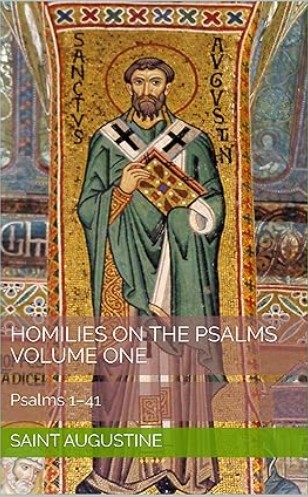
Augustine connects the fear of the Lord with the beginning of wisdom, then writes in Homilies on the Psalms: “He will establish a law for him in the way, which he has freely chosen, so that he may no longer sin with impunity.” The road includes a chosen direction and a real change in conduct. To ask God to teach us is to let his instruction govern the next step, even when we would rather keep an old habit or settle a conflict on our own terms.
The enemies remain in the psalm. The troubles of the heart increase; the net still threatens the feet. Yet the speaker keeps his eyes on the Lord and asks to be freed. Augustine attends to that image too: the one who looks to God depends on him to pull the feet from the snare. This is not a denial of danger. It is a way to keep danger from becoming the only thing the heart sees.
Carry the prayer into one decision today. Name the pressure you face, and name the sin or stubbornness that may be shaping your response. Ask God to show you the next faithful step, then take it: speak truth, refuse the cutting reply, or make the repair you have delayed. The Lord guides the humble and teaches sinners his way. Let his instruction reach your feet.
Evening
Revelation 1:1–8 Berean Standard Bible
1This is the revelation of Jesus Christ, which God gave Him to show His servants what must soon come to pass. He made it known by sending His angel to His servant John, 2who testifies to everything he saw. This is the word of God and the testimony of Jesus Christ.
3Blessed is the one who reads aloud the words of this prophecy, and blessed are those who hear and obey what is written in it, because the time is near.
4John,
To the seven churches in the province of Asia:
Grace and peace to you from Him who is and was and is to come, and from the seven spirits before His throne, 5and from Jesus Christ, the faithful witness, the firstborn from the dead, and the ruler of the kings of the earth.
To Him who loves us and has released us from our sins by His blood, 6who has made us to be a kingdom, priests to His God and Father — to Him be the glory and power forever and ever! Amen.
7Behold, He is coming with the clouds, and every eye will see Him — even those who pierced Him. And all the tribes of the earth will mourn because of Him. So shall it be! Amen.
8“I am the Alpha and the Omega,” says the Lord God, who is and was and is to come — the Almighty.
As evening settles over the day, Revelation opens with a greeting to seven churches: grace and peace from the One who is, was, and is to come. The greeting carries a hard horizon. Jesus, the faithful witness and ruler of earth’s kings, is coming with the clouds; every eye will see him, including the eyes of those who pierced him. The vision moves from grace given to churches to a sight no one can turn away from.
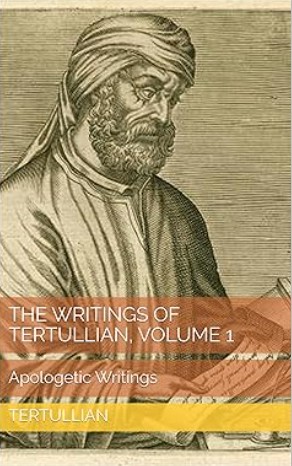
Before John tells of that sight, he names what Christ has done: he loves us, releases us from our sins by his blood, and makes us a kingdom and priests to God. Tertullian holds fast to this royal gift in The Chaplet: “For Christ Jesus has made us kings to God and His Father. What do you have in common with a flower that will wither? You have a flower in the Branch of Jesse, on which the full grace of the Divine Spirit rested—a flower undefiled, unfading, eternal.” His image sets our brief lives beside Christ’s enduring life. To be made kings is to belong to him, the one whose reign reaches beyond the day’s passing honors and fears.
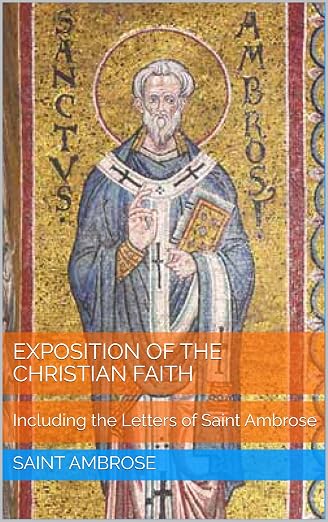
That belonging begins with release, yet it does not erase the cost of the blood that releases us. Nor does the greeting of grace cancel the vision of judgment. The one who loves his people is also the one who comes; the pierced one is seen by every eye. Ambrose presses this link in Exposition of the Christian Faith: “Who did they pierce, I ask? For whose coming do we wait but the Son’s? Therefore, Christ is Almighty Lord and God.” The question keeps the wounds in view. The coming King bears the marks of what people did to him.
John says that all the tribes of the earth will mourn because of him. Let that grief remain sharp as you look back over your day. Perhaps a sharp word came easily, or you protected your own standing while someone else bore the cost. The vision does not let us treat harm as a small matter. It places every life before Christ, whose love releases sinners and whose coming exposes what they have done.
The final name is Alpha and Omega: the beginning and the end belong to the Lord God Almighty. Tonight, the day’s unfinished business rests within that claim, while the mourning of the tribes still stands in John’s vision. When you meet the eyes of the one who is coming, what from this day will you have to face?
Works Cited
A language model (gpt-6-luna) wrote this prose in repeated rounds with human review and direction, from passages found in Appian Way Press's editions of early Christian writings. Rick Brannan then reviewed it. Bible text: Berean Standard Bible. How this devotional was made, and how you may share it.