Monday, 30 November
Advent Week One: Keeping Watch in Hope
Morning
1 Thessalonians 1:1–10 Berean Standard Bible
1Paul, Silvanus, and Timothy,
To the church of the Thessalonians in God the Father and the Lord Jesus Christ:
Grace and peace to you.
2We always thank God for all of you, remembering you in our prayers 3and continually recalling before our God and Father your work of faith, your labor of love, and your enduring hope in our Lord Jesus Christ.
4Brothers who are beloved by God, we know that He has chosen you, 5because our gospel came to you not only in word, but also in power, in the Holy Spirit, and with great conviction — just as you know we lived among you for your sake. 6And you became imitators of us and of the Lord when you welcomed the message with the joy of the Holy Spirit, in spite of your great suffering.
7As a result, you have become an example to all the believers in Macedonia and Achaia. 8For not only did the message of the Lord ring out from you to Macedonia and Achaia, but your faith in God has gone out to every place, so that we have no need to say anything more. 9For they themselves report what kind of welcome you gave us, and how you turned to God from idols to serve the living and true God 10and to await His Son from heaven, whom He raised from the dead — Jesus our deliverer from the coming wrath.
Paul remembers a church by the shape of its days: work, labor, endurance. In 1 Thessalonians 1:1-10, waiting for Jesus is not a pause in life. The Thessalonians serve the living God while they suffer, and their faith becomes known beyond their city. Their hope has hands and feet.
Paul holds these things together. Their work comes from faith, their labor from love, and their endurance from hope in Jesus. Suffering has not made their waiting passive. They receive the message with joy from the Holy Spirit, then live it where neighbors can see. Their example travels farther than they do. This morning, the passage turns the question from how long the wait will last to what your waiting is doing in you.
Their story begins with a turn: they left idols to serve the living and true God and to await his Son. The turn matters. Waiting is not simply watching the horizon; it is giving your life to the One who is coming. The Thessalonians’ service and endurance grow from that changed allegiance. They keep working and loving in a world marked by suffering because their future rests with Jesus, whom God raised from the dead.
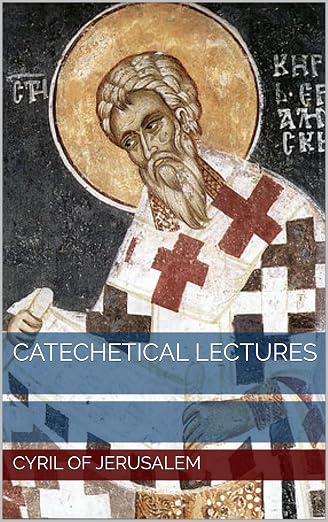
In Catechetical Lectures, Cyril of Jerusalem urges his hearers to “wait for the true Christ, the Only-begotten Son of God, who will come no longer from earth but from heaven. He will appear to everyone, shining brighter than any lightning or brilliant light, accompanied by angelic guards. He will judge both the living and the dead and will reign in a heavenly, eternal kingdom that will never end.” Cyril directs attention to the certainty and weight of Christ’s coming: the one awaited is also the judge and king. That future gives present endurance its seriousness. The church’s labor matters because it belongs to the living God, and the Son’s arrival is real.
Choose one thing to turn from today: the idol of control, the belief that everything depends on your keeping it in hand. Do the work love requires; bear the pressure in front of you; leave the outcome with God. The Thessalonians waited by serving, and their service pointed beyond themselves to the Son from heaven. Let your first allegiance govern the next task you take up.
Evening
Matthew 21:1–11 Berean Standard Bible
1As they approached Jerusalem and came to Bethphage on the Mount of Olives, Jesus sent out two disciples, 2saying to them, “Go into the village ahead of you, and at once you will find a donkey tied there, with her colt beside her. Untie them and bring them to Me. 3If anyone questions you, tell him that the Lord needs them, and he will send them right away.”
4This took place to fulfill what was spoken through the prophet:
5“Say to the Daughter of Zion,
‘See, your King comes to you,
gentle and riding on a donkey,
on a colt, the foal of a donkey.’”
6So the disciples went and did as Jesus had directed them. 7They brought the donkey and the colt and laid their cloaks on them, and Jesus sat on them.
8A massive crowd spread their cloaks on the road, while others cut branches from the trees and spread them on the road.
9The crowds that went ahead of Him and those that followed were shouting:
“Hosanna to the Son of David!”
“Blessed is He who comes in the name of the Lord!”
“Hosanna in the highest!”
10When Jesus had entered Jerusalem, the whole city was stirred and asked, “Who is this?”
11The crowds replied, “This is Jesus, the prophet from Nazareth in Galilee.”
At evening, Jerusalem’s entrance scene can look like a royal welcome: cloaks cover the road, branches are cut, and voices cry out. Yet Jesus comes on a donkey that belongs to someone else. The crowd’s noise gathers around a king who has chosen no chariot, horse, or display of force. Matthew 21:1-11 holds the two details together: the city is stirred, and the king arrives without the signs people might expect to settle who he is.
The disciples go to fetch the animals because Jesus tells them to. Their answer to anyone who questions them is that the Lord needs them. The king’s authority appears in this small errand, and then in the crowd’s response: cloaks laid down, branches spread, cries of welcome. Still, the scene does not explain itself. A procession can tell the city that someone matters; it cannot make everyone understand what kind of king he is.
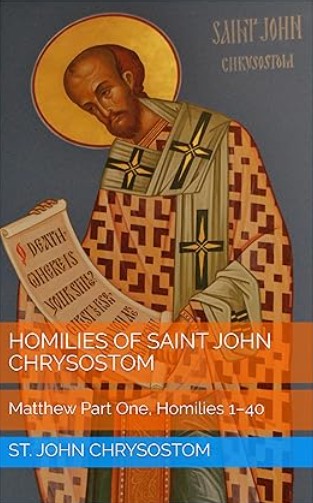
John Chrysostom says Jesus made himself more visible when the cross was near, after showing enough proof of his power: “If He had appeared openly like this from the start, He would not have been admired, and He would have stirred up even greater anger.” The timing matters. Jesus enters publicly, yet the borrowed donkey sets the terms of his appearance. He does not arrive as a ruler who overwhelms the city into recognition. Even the crowd’s loud welcome leaves the harder question for Jerusalem to ask.
When the city asks, “Who is this?” the crowd answers, “This is Jesus, the prophet from Nazareth in Galilee.” Their words are true, and they are too small for the scene. The cries of “Son of David” have named a royal hope; the answer names a prophet from a place. Matthew lets the question stand beside both responses. The king has come, but the city has not yet grasped the full weight of his coming.
Look back over the day: perhaps you wanted Jesus to settle a matter quickly, display his power, or make his purpose unmistakable. The scene leaves the king on the donkey, welcomed by some and questioned by the city. What did you expect Jesus to be for you today, and what does that expectation tell you about the king you wanted?
Works Cited
A language model (gpt-6-luna) wrote this prose in repeated rounds with human review and direction, from passages found in Appian Way Press's editions of early Christian writings. Rick Brannan then reviewed it. Bible text: Berean Standard Bible. How this devotional was made, and how you may share it.