What would early Christian writers think of artificial intelligence and personhood?
The early Christian writings provided do not address artificial intelligence or whether a non-biological entity could achieve personhood. However, they offer a clear understanding of what constitutes human personhood, emphasizing its unique divine origin and composition.
Human nature is consistently described as a specific creation by God. Gregory of Nyssa, in On Infants’ Early Deaths, states that man appeared on earth as "a mixture from Divine sources, the godlike intellectual essence united with earthly elements contributed to his formation." He was "fashioned by his Maker to be the living image of Divine transcendent Power," created "in His own image, in the image of God He created him" (Genesis 1:27). Eusebius of Caesarea, in The Preparation for the Gospel, further clarifies that "a true human is made in the image and likeness of God, and that he is a work of God, not the result of chance or automatic nature." He cites the Hebrew writings, "And God took dust from the ground and formed man, and breathed into his face the breath of life, and man became a living soul" (Genesis 2:7).
Key aspects of this divinely created human personhood include:
- Reason and Intellect: Gregory of Nyssa, in a Note on the Treatise “On the Making of Man”, explains that man was made "in the likeness of God in terms of various moral qualities and possesses reason." He distinguishes man from lower animals by having a "rational soul" alongside "natural" or "vegetative" and "sensible" souls. Origen, in On First Principles, notes that "participation in Christ, as the word of reason, makes them rational beings."
- Free Will: Human beings are capable of "either praise or blame, since they can choose virtue or vice," as Origen states in On First Principles. Athanasius, in The situation after the Council of Nicaea, mentions that created spirits are "mutable in will," and Gregory of Nyssa, in Chapter III — His Origenism, affirms that "in that man was God’s image, his will was free."
- Connection to the Body and Senses: Gregory of Nyssa, in a Note on the Treatise “On the Making of Man”, clarifies that "the human mind differs from the Divine nature because it gains knowledge through the senses and depends on them to perceive external things." He adds that "the body is designed as an instrument for the mind, adapted for a rational being," and that "perception requires both body and mind." The mind's nature is "incomprehensible, resembling the Divine nature it reflects," and the name "soul" properly belongs to the rational element.
In summary, the provided writings consistently define human personhood as originating from a specific divine act of creation, involving a unique composition of divine intellectual essence and earthly elements, and possessing a rational soul, free will, and a necessary connection to a physical body and senses for its operation in the world. The concept of artificial intelligence is not addressed within these texts.
Works Cited in This Issue
-
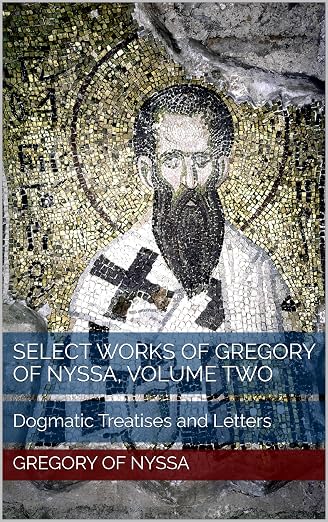
Select Works of Gregory of Nyssa, Volume Two: Dogmatic Treatises and Letters
This volume presents the theological masterpieces of Gregory of Nyssa, one of the Cappadocian Fathers and a pivotal figure in fourth-century Christianity, whose writings significantly shaped orthodox doctrine. It collects his major dogmatic treatises and surviving pastoral letters from the Nicene and Post-Nicene Fathers series, offering insights into key doctrines such as the Trinity, the Incarnation, and the Holy Spirit, as well as revealing his ministry as a bishop and spiritual guide. Carefully revised from the historic NPNF translation, this edition modernizes spelling, punctuation, and formatting while preserving the original substance, making Gregory's profound theological reflections and pastoral concerns accessible to contemporary readers. His work combines biblical interpretation, philosophical clarity, and spiritual depth, demonstrating the inseparable relationship between rigorous theology and faithful Christian living. Serving both scholars and spiritual seekers, this volume showcases Gregory's enduring influence on Eastern and Western Christian thought and provides a valuable resource for understanding fourth-century theology.
-
The Preparation for the Gospel: Praeperatio Evangelica
In this monumental early church apologetic, Eusebius systematically dismantles the contradictions and moral failings of Greco-Roman polytheism. Drawing deeply on the Hebrew Scriptures, he demonstrates how divine wisdom and providence have been unfolding throughout history to prepare humanity for the revelation of Jesus Christ. Rather than rejecting classical philosophy outright, Eusebius engages with it critically, highlighting its highest ideals as pointers toward the fullness of Christian truth. This work stands as a bridge between pagan philosophy and Christian theology, showing how early Christians used reason, history, and prophecy to defend and explain their faith.
-
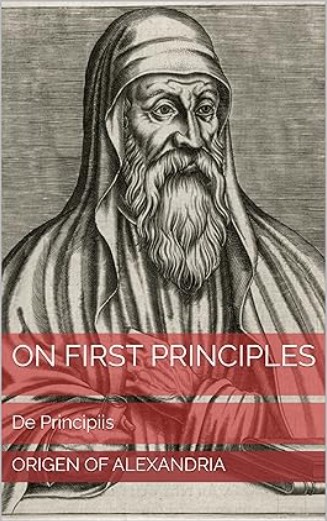
On First Principles: de Principiis
Composed in the early third century, On First Principles represents a turning point in Christian intellectual history. Origen seeks not merely to defend the faith, but to explain its inner logic—how the doctrines of Scripture fit together into a meaningful whole. His work reflects a Church still defining its theological vocabulary while already wrestling with the deepest questions of God, humanity, and redemption. This edition presents a careful modernization of the classic Ante-Nicene Fathers translation. The original meaning and structure have been preserved while archaic language and tangled syntax have been clarified for today’s readers. The result is a readable, reliable English text designed for pastors, students, translators, and serious readers who want direct access to one of the most important theological works of early Christianity.
This answer was generated on 2026-10-17 using a retrieval-augmented generation (RAG) system built on Appian Way Press's own translations and revisions of early Christian writings, with the gemini-2.5-flash language model producing the final answer text from the retrieved passages.