What did Origen think of the pre-existence of souls?
Origen held the doctrine of the soul’s eternal pre-existence. According to Gregory of Nyssa, in Select Works of Gregory of Nyssa, Volume One: Against Euonimus, Origen, "focused unwaveringly on the ideal world," solved the problem of the soul's origin "with his doctrine of the soul’s eternal pre-existence." Gregory explains that this approach "avoided both the supposed absurdity of Creationism and the crudeness of Traducianism." Rufinus of Aquileia, in Life and Works of Rufinus, also identifies this as "the opinion of Origen and some others among the Greeks" regarding the nature of the soul.
This doctrine was part of Origen's broader understanding of creation, which Gregory of Nyssa describes as an "eternal creation" of both the intelligible and visible worlds. Gregory notes that Origen's "creation, both of the intelligible and visible worlds, had an eternity that was unnatural and inconsistent with his other beliefs," and that this "eternal pre-existence almost destroyed the idea of creation." He further characterizes this aspect of Origen's system as "the last remnant of paganism in a system otherwise thoroughly Christian."
While Origen advocated for the pre-existence of souls, this view was not universally accepted and was eventually rejected by the Church. Gregory of Nyssa states that "the Church, for reasons beyond pure idealism, had to reject that doctrine." Gregory himself "rejects the pre-existence of the rational soul because it cannot explain the infinite variety we observe in souls." Jerome, in Select Works of Saint Jerome, Volume One: Prolegomena and Letters, initially "quoted statements without criticism, such as those about the pre-existence of human souls" in his Commentary on Ephesians. However, Jerome's later judgment was that Origen’s "doctrinal views needed to be read with great caution, and those specifically challenged were heretical," implying that the pre-existence of souls was among these challenged doctrines.
Works Cited in This Issue
-
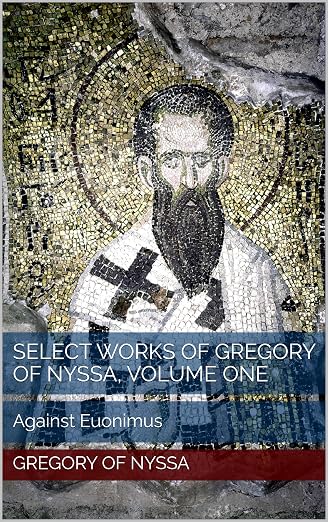
Select Works of Gregory of Nyssa, Volume One: Against Euonimus
This volume presents Gregory of Nyssa’s monumental theological response to Eunomius, who challenged Nicene orthodoxy by claiming that God's nature could be fully comprehended by human reason and that the Son was unlike the Father in essence. As one of the Cappadocian Fathers, Gregory defends the full deity of the Son and the mystery of the divine nature through biblical exegesis, philosophical rigor, and pastoral concern in his work Against Eunomius and related writings. Carefully revised from the historic Nicene and Post-Nicene Fathers translation, this edition modernizes spelling, punctuation, and formatting while preserving the substance of Gregory’s arguments for contemporary readers. The volume includes an original introduction to Gregory’s life, ministry, and theology, making it an essential resource for students of early Church history, patristics, and Trinitarian theology. Gregory’s profound insights into the doctrine of the Trinity continue to challenge and enrich readers, providing an unparalleled window into one of Christianity’s most significant doctrinal debates.
-
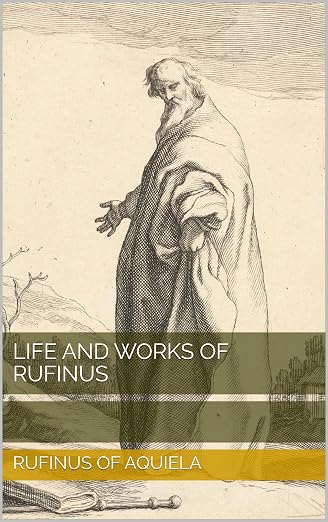
Life and Works of Rufinus
This modernized edition illuminates the life and works of Tyrannius Rufinus, a pivotal early Church translator, historian, and theologian whose efforts preserved Greek Christian literature for the Latin West. Drawing on materials from the classic Nicene and Post-Nicene Fathers series, it offers readers insight into Rufinus’ influential role in theological debates such as the Origenist controversy and his famous dispute with Jerome. Through carefully revised translations and updated formatting, this volume maintains the original style while making the content accessible to contemporary audiences. Ideal for students, pastors, and historians, the book highlights Rufinus’ lasting legacy in shaping Christian scholarship and transmitting early Christian intellectual heritage.
-
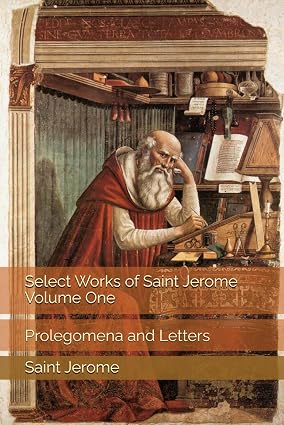
Select Works of Saint Jerome, Volume One: Prolegomena and Letters
The Letters of Saint Jerome present a comprehensive collection of correspondence from one of the early Church’s most influential biblical scholars, offering a vivid glimpse into his life, work, and theological thought. Through letters addressed to a diverse group including bishops, monks, and friends, Jerome engages deeply with scriptural interpretation, translation, and the study of biblical languages, reflecting his scholarly rigor and devotion to Christian asceticism. The letters also reveal Jerome’s responses to the spiritual and practical challenges of early Christian life, such as monasticism, prayer, suffering, and pastoral care, alongside his active participation in the doctrinal controversies of the late fourth and early fifth centuries. Accompanied by introductory and biographical material, this volume not only contextualizes Jerome’s contributions but also preserves his role in shaping Christian biblical scholarship and ecclesiastical debates. Updated for modern readers, this edition provides invaluable insight for those interested in patristic theology, early Christianity, and the enduring legacy of Jerome’s theological and spiritual correspondence.
This answer was generated on 2026-10-03 using a retrieval-augmented generation (RAG) system built on Appian Way Press's own translations and revisions of early Christian writings, with the gemini-2.5-flash language model producing the final answer text from the retrieved passages.