What did early Christians think of the use of icons and images?
Early Christian writers, as represented in these excerpts, generally held a strong negative view regarding the making and worship of images, particularly in the context of pagan practices. They condemned the creation of idols and likenesses, viewing it as a corruption of true worship and a descent into irrationality.
Athanasius, in AGAINST THE HEATHEN, criticizes those who "exchanged the glory of the incorruptible God for the likeness of an image of corruptible man, and of birds and four-footed beasts and creeping things," stating that they "wallow in these images and portray God, the Father of the Word, in irrational shapes." He notes that some philosophers defended such images by claiming they help the deity "answer them and be revealed" or "for invoking and manifesting divine angels and powers," but Athanasius presents these as inconsistent and foolish justifications.
Lactantius, in THE DIVINE INSTITUTES, similarly condemns the practice, calling it "madness" to "create objects that you might later fear, or to fear the things you have made." He refutes the argument that people fear the beings represented rather than the images themselves, questioning why they would focus on "walls, wood, and stone instead of the place where you believe they dwell." Lactantius asserts that "The practice of making likenesses was invented by humans to keep the memory of those who have died or are absent."
Clement of Alexandria, in Exhortation to the Greeks, contrasts the divine creation of humanity as "a living image" with pagan idols, which he calls "a mere image of an image, greatly lacking in truth," and "the silent work of Attic hands." He emphasizes that "the Word is the image of God; and the divine Word is the true Son of the Mind," and that "man is the image of the Word." He dismisses "the lifeless statues that look like men" as "far from the truth, clearly appear as a mere copy," concluding that "life was nothing but full of madness, given the great eagerness spent on matter."
Tertullian, in ON IDOLATRY, explicitly states that "idolatry means 'all attention and service given to any idol'" and that "every maker of an idol is guilty of the same crime." He asserts that "God forbids making an idol just as much as worshipping one," citing the divine law: "You shall not make an idol," and adding, "Nor a likeness of anything in heaven above, or on the earth below, or in the waters under the earth," which he interprets as "forbidding God’s servants everywhere from such acts." He concludes that "Whatever guilt idolatry brings, it must be charged equally to every maker of every idol."
However, Tertullian, in THE FIVE BOOKS AGAINST MARCION, offers a specific distinction for images commanded by God in the Old Testament. He explains that the brazen serpent, which the Lord commanded Moses to make, "was no excuse for idolatry; it was meant to heal those bitten by fiery serpents." Likewise, the golden Cherubim and Seraphim were "simply decorations on the ark, designed purely for ornamentation and completely unrelated to any form of idolatry." He argues that these divinely commanded likenesses "clearly do not violate this prohibition because they are not the kind of likenesses the law forbids." This indicates that while man-made images for worship were strictly forbidden, images commanded by God for specific, non-idolatrous purposes were not seen as violations.
Theological discussions of "image" further clarify this perspective:
- Saint John Chrysostom, in Second Timothy, notes that the word "image" can mean "a likeness" or "something lifeless and worthless," citing scriptural examples like "A man ought not to cover his head, for he is the image and glory of God" (1 Cor. 11:7) versus "Man walks in an image" (Ps. 39:9, Gr.).
- Saint Basil, in THE HEXAEMERON, discussing the creation of man "in our image," states that the divine "form is understood as it suits the divine—not in bodily shape, but in the true qualities of Godhead," referring to Christ as "the image of the invisible God."
- Gregory of Nyssa, in On the Making of Man, also uses the singular "image" in the Genesis account to argue for the unity of the Holy Trinity, stating it would be "impossible for one likeness to represent things that do not agree" if the divine originals were unlike each other.
These theological understandings emphasize that the true divine "image" is spiritual and inherent, not a material or bodily representation. The excerpts primarily focus on condemning pagan idol worship and defining the theological concept of "image," rather than discussing the use of images within Christian worship or teaching.
Works Cited in This Issue
-
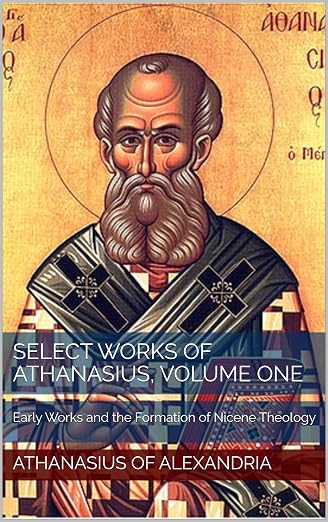
Select Works of Athanasius, Volume One: Early Works and the Formation of Nicene Theology
This volume presents the foundational theological writings of Athanasius of Alexandria, a pivotal figure in defending the Nicene faith against Arianism. It includes his earliest and most influential works, such as *Against the Heathen* and *On the Incarnation*, as well as key documents from the Arian controversy and the Council of Nicaea. The collection highlights Athanasius’ central themes, including the eternal divinity of Christ, the significance of the Incarnation, and the preservation of apostolic doctrine. Carefully revised for modern readability while maintaining historical accuracy, the volume situates Athanasius within the complex theological debates of the fourth-century Church. This essential resource offers valuable insight for students, theologians, and readers interested in the development of Christian doctrine and the enduring impact of Athanasius’ thought.
-
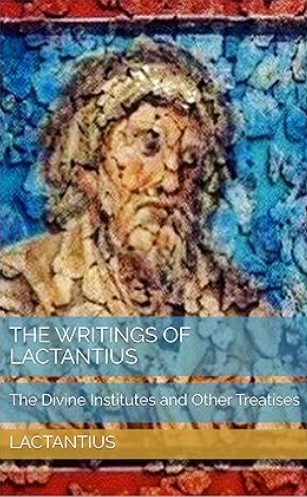
The Writings of Lactantius: The Divine Institutes and Other Treatises
Written at the crossroads of Roman rhetoric and Christian theology, Lactantius’s works present one of the earliest sustained efforts to explain and defend Christianity to the educated world of the Roman Empire. At the heart of this volume is The Divine Institutes, Lactantius’s most influential work and the centerpiece of his literary legacy. Modeled consciously on classical philosophical treatises, it offers a comprehensive critique of pagan religion and philosophy while presenting Christianity as the only coherent account of God, morality, and human destiny. Unlike earlier apologies, it is not merely defensive but constructive, aiming to demonstrate the rational superiority of the Christian faith.
-
Exhortation to the Greeks: ΛΟΓΟΣ ΠΡΟΤΡΕΠΤΙΚΟΣ ΠΡΟΣ ΕΛΛΗΝΑΣ
Clement of Alexandria’s Exhortation to the Greeks (Protrepticus) is a sharp-edged call to conversion. Addressed to educated pagans of the second century, it critiques their inherited religion—not with ridicule, but with clarity, logic, and moral force. Clement argues that the gods of Olympus offer no lasting truth, and that only Christ, the divine Logos, brings virtue, wisdom, and eternal life.
-
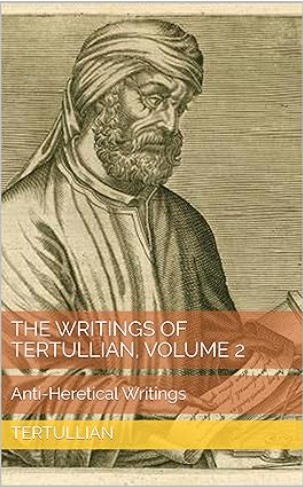
Writings of Tertullian, Volume Two: Anti-Heretical Writings
This volume gathers Tertullian’s major anti-heretical works from the Ante-Nicene Fathers, presented in clear, contemporary English for today’s reader. These writings arise from a period when Christian doctrine had not yet been formally codified and the church was forced to define its faith through sustained conflict with rival teachers operating from within its own ranks. Modernized for today’s reader, these writings preserve Tertullian’s polemical edge while removing the barriers of archaic English. Together they reveal a Christianity learning to define itself from within, under the pressure of doctrinal fracture, philosophical challenge, and the ever-present cost of public faith.
-
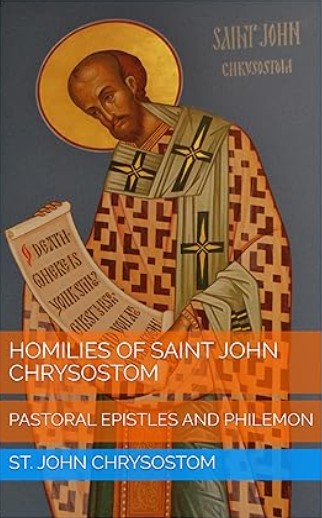
Homilies of Saint John Chrysostom: Pastoral Epistles and Philemon
Preached to congregations familiar with the demands and challenges of ministry, these homilies bring Paul’s practical wisdom into sharp focus. Chrysostom addresses leadership, discipline, moral character, and the daily life of the Church with a directness that remains strikingly relevant. This edition preserves the substance and structure of the nineteenth-century English translation while presenting it in a clear, accessible format, allowing modern readers to hear Paul’s pastoral counsel through the voice of one of the Church’s greatest preachers.
-
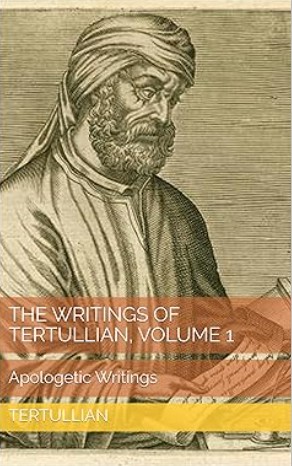
Writings of Tertullian, Volume One: Apologetic Writings
This volume gathers the principal apologetic writings of Tertullian as preserved in the Ante-Nicene Fathers, presented in clear, contemporary English. At its center stands The Apology, a work of remarkable forensic clarity that reframes the Christian condition before Roman law and public opinion. From that juridical foundation Tertullian moves outward into the life of the city: On Idolatry unmasks the compromises of everyday practice; The Shows exposes the moral cost of public spectacle; The Chaplet makes the smallest gesture—a crown—into a test of conscience and allegiance. The collection also includes appeals and arguments addressed to authority and culture. To Scapula speaks plainly to a governor with historical warning and moral urgency. To the Nations answers the intellectual and popular charges laid against Christians across the empire. An Answer to the Jews engages contested readings of Scripture at a time when the boundaries between synagogue and church were still being formed. Balancing public defense with inner inquiry, The Soul’s Testimony treats conscience itself as a witness to divine truth, while A Treatise on the Soul supplies one of the earliest Christian accounts of human origin, constitution, moral struggle, and destiny. Modernized for readers today, these texts preserve Tertullian’s severity and precision while removing the barriers of archaic English so that clergy, students, and serious readers may engage these foundational works directly.
This answer was generated on 2026-10-03 using a retrieval-augmented generation (RAG) system built on Appian Way Press's own translations and revisions of early Christian writings, with the gemini-2.5-flash language model producing the final answer text from the retrieved passages.