What did early Christians think of just war versus pacifism?
Early Christian writings reveal a multifaceted understanding of warfare, encompassing both strong inclinations towards pacifism and the development of a just war theory.
A significant emphasis on peace and the abandonment of violence is evident in some early Christian thought. Athanasius, in On the Incarnation of the Word, contrasts the pre-Christian world, where "Greeks and Barbarians fought each other and were cruel even to their own relatives," and "their whole lives were lived by the sword." He states that "after joining the school of Christ," a remarkable transformation occurred: people "abandoned their savage killings and no longer cared for war. Instead, they live in peace, and from then on, they value what builds friendship." Athanasius further asserts that "Wars and conflicts, once stirred up by demons, have been calmed by Christianity," and that "The faith teaches peace and reconciliation, quieting the violence that once ruled human hearts." Similarly, Eusebius of Caesarea, in The History of the Church, recounts Justin Martyr's observation that Christians were "fearless toward death and all things considered terrible," leading him to conclude "it impossible for them to exist in evil and pleasure." This steadfastness in the face of persecution, even unto death, suggests a non-resistant posture in certain contexts.
Conversely, Saint Augustine, in REPLY TO FAUSTUS THE MANICHÆAN, articulates a clear framework for a just war. He states that "A lot depends on why people go to war, and what authority they have to do it." Augustine explains that "The natural order, which aims at the peace of humanity, sets things up so that the ruler has the power to declare war if he thinks it is necessary, and the soldiers carry out their military duties for the peace and safety of the community." He explicitly defines a just war by noting that "When a war is undertaken in obedience to God—who rebukes, humbles, and crushes human pride—it must be acknowledged as a just war." Furthermore, Augustine suggests that even wars arising from human passion can serve a divine purpose, benefiting saints by "testing their patience, disciplining their spirit, and making them endure a father’s correction." In The City of God, Augustine praises the Christian Emperor Theodosius, who engaged in war but subsequently treated the sons of his enemies with "Christian love," allowing them to keep their property and granting them honors, demonstrating that Christian principles should guide the conduct and aftermath of warfare.
Works Cited in This Issue
-
The History of the Church: Historia Ecclesiastica
Eusebius of Caesarea’s History of the Church (Historia Ecclesiastica) is the earliest surviving account of Christianity’s growth from a persecuted sect to an empire-wide faith. Written in the early fourth century, this monumental work draws from scripture, state records, personal letters, and now-lost sources to capture the church’s first three hundred years.
-

The City of God, Volume One: The Refutation of Pagan Religion (Books 1–10)
Written in the aftermath of Rome’s fall, Augustine’s City of God confronts the charge that Christianity was responsible for the empire’s decline and exposes the theological emptiness of pagan religion. In the first ten books of The City of God, Augustine addresses one of the central accusations of his age: that the abandonment of the traditional gods had brought disaster upon Rome. With historical argument, theological reasoning, and sharp rhetorical skill, he demonstrates that Rome’s gods neither preserved the city from calamity nor provided moral transformation or true happiness to their worshipers.
-
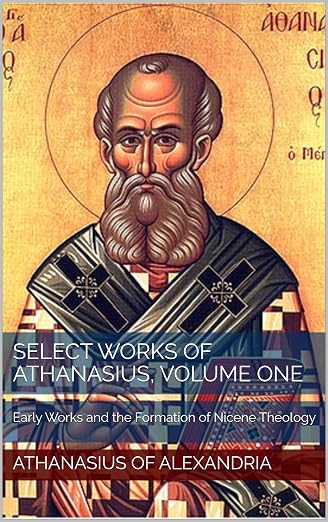
Select Works of Athanasius, Volume One: Early Works and the Formation of Nicene Theology
This volume presents the foundational theological writings of Athanasius of Alexandria, a pivotal figure in defending the Nicene faith against Arianism. It includes his earliest and most influential works, such as *Against the Heathen* and *On the Incarnation*, as well as key documents from the Arian controversy and the Council of Nicaea. The collection highlights Athanasius’ central themes, including the eternal divinity of Christ, the significance of the Incarnation, and the preservation of apostolic doctrine. Carefully revised for modern readability while maintaining historical accuracy, the volume situates Athanasius within the complex theological debates of the fourth-century Church. This essential resource offers valuable insight for students, theologians, and readers interested in the development of Christian doctrine and the enduring impact of Athanasius’ thought.
-
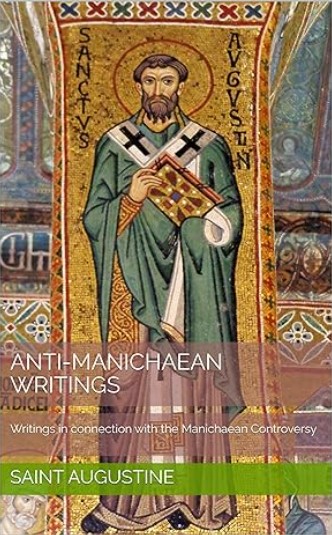
Anti-Manichaean Writings: Writings in connection with the Manichaean Controversy
These writings arise from Augustine’s long and personal involvement with Manichaeism, a movement he followed for years before his conversion to Catholic Christianity. As a result, his critique is shaped not only by formal theological argument, but also by an intimate knowledge of the system’s internal logic, moral claims, and intellectual appeal. Across these treatises, Augustine confronts the Manichaean vision of the world as a conflict between coeternal principles of light and darkness. He defends the unity and goodness of the Creator, the integrity of the material world, and the coherence of the biblical account of creation, while developing a sustained reflection on the nature of evil, human will, and moral responsibility.
This answer was generated on 2026-10-17 using a retrieval-augmented generation (RAG) system built on Appian Way Press's own translations and revisions of early Christian writings, with the gemini-2.5-flash language model producing the final answer text from the retrieved passages.