What did Chrysostom think of wealth and poverty?
Saint John Chrysostom viewed wealth and poverty not as inherently good or evil, but as conditions whose value depends entirely on how they are used and the attitude one holds towards them. However, he consistently highlighted the spiritual advantages of poverty and the significant dangers and obstacles posed by wealth.
In Homilies of Saint John Chrysostom: Second Corinthians, Homily XVII, Chrysostom emphasizes the transformative power of poverty through the example of Christ, stating, "For you know the grace of our Lord Jesus Christ, that though He was rich, yet for your sake He became poor, so that through His poverty you might become rich." He explains that "poverty has made riches rich," defining these riches as "the knowledge of godliness, the cleansing of sins, justification, sanctification, and the countless blessings He has given us and intends to give." This divine example underscores that true wealth is spiritual, not material.
Chrysostom frequently redefines what it means to be rich or poor, shifting the focus from possessions to inner disposition. In Homilies of Saint John Chrysostom: Philippians, Colossians, and the Thessalonian Epistles, Homily II, he asserts, "He is not rich who has great possessions, but he who needs nothing. ... It is our attitudes that make us rich or poor, not the abundance or lack of money." He further clarifies, "He is rich who does not desire to be rich; he is poor who refuses to be poor." Similarly, in the same homily, he states, "He is not poor who has nothing, but he who desires many things!"
While acknowledging that "neither wealth nor poverty is good in itself," as stated in Homilies of Saint John Chrysostom: Hebrews, Homily II, Chrysostom argues that "A Christian stands out more in poverty than in riches." Poverty, he suggests, makes one "less proud, more sober, more serious, fairer, and more thoughtful," whereas wealth presents "many obstacles to these qualities." He lists numerous evils associated with the misuse of wealth, including "robbery, fraud, and violence," "unseemly desires, immoral relationships, witchcraft, poisonings, and many other horrors." He concludes that "pursuing virtue is easier in poverty than in wealth."
Chrysostom identifies wealth as a root of many evils. In Homilies of Saint John Chrysostom: Second Corinthians, Homily XIII, he links wealth to "Pride, the mother of all evils," and cites 1 Timothy 6:10, stating, "The love of money is a root of all kinds of evil." He argues that the rich are "closer to this root" because "the more possessions someone has, the more he desires." He also notes that "Vainglory also spoils many good deeds, and it too is found mostly among the rich." Conversely, in Homilies of Saint John Chrysostom: John, Homily LXXVI, he states, "Poverty teaches us wisdom, patience, and all true understanding."
The parable of Lazarus and the rich man serves as a powerful illustration of Chrysostom's views. In Homilies of Saint John Chrysostom: Second Corinthians, Homily XIII, and Homilies of Saint John Chrysostom: Philippians, Colossians, and the Thessalonian Epistles, Homily II, he uses this story to demonstrate that "the poor man’s poverty did not stop him from entering the kingdom; the rich man’s wealth did not save him from hell." He clarifies that the rich man was punished "not because he was rich... but because he showed no compassion," yet the parable still teaches "how great a good it is to put no trust in riches." He observes that "few rich are saved, but many more poor are."
Almsgiving is presented as a crucial practice for overcoming the dangers of wealth. In Homilies of Saint John Chrysostom: Philippians, Colossians, and the Thessalonian Epistles, Introductory Discourse, Chrysostom explains that "The one who has learned to despise wealth has cut out the root of all evils." Almsgiving teaches one "not to admire riches or gold," leading to a soul that "becomes wise, elevated, and rich," and cutting away "countless causes of quarrels, jealousy, envy, and sadness." This practice helps one to "no longer desire what belongs to his neighbor" and "no longer envies the rich," ultimately clearing "the eye of his soul."
Works Cited in This Issue
-
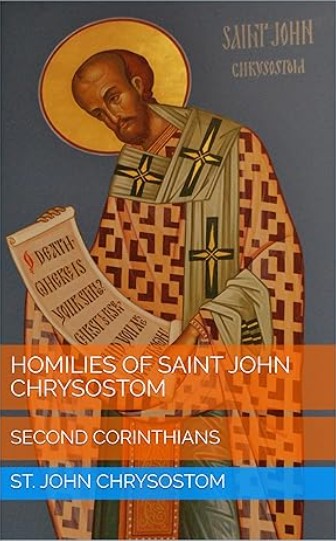
Homilies of Saint John Chrysostom: Second Corinthians
Preached in Antioch, these sermons show Chrysostom interpreting the Apostle Paul not as a distant figure but as a living example for believers. He reads the letter as a mirror of Christian leadership and discipleship—how endurance under trial proves the reality of faith. His sermons combine careful exegesis with pastoral tenderness, confronting pride, discouragement, and the temptation to despair. This revised edition preserves the precision and faithfulness of the Nicene and Post-Nicene Fathers translation while updating its language for readability today. Chrysostom’s voice emerges with renewed clarity: wise, compassionate, and urgent.
-

Homilies of Saint John Chrysostom: Philippians, Colossians, and the Thessalonian Epistles
Chrysostom’s preaching brings Paul’s letters to life with clarity, urgency, and deep spiritual insight. In these homilies on Philippians, Colossians, and First and Second Thessalonians, Saint John Chrysostom guides his congregation—and modern readers—through some of Paul’s most encouraging and practical writings.
-
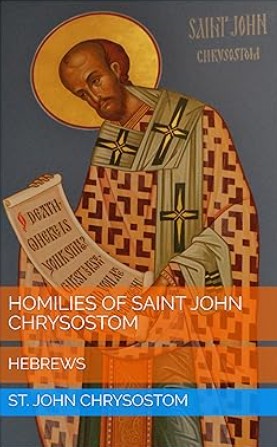
Homilies of Saint John Chrysostom: Hebrews
In these sermons, the “golden-mouthed” preacher brings both his rhetorical brilliance and his deep pastoral concern to bear on a letter whose message he calls “the crown of Paul’s writings.” With care and urgency, he unfolds the contrasts between old and new covenant, shadow and reality, ritual and fulfillment—always leading his hearers to the surpassing greatness of Christ. This revised edition updates the nineteenth-century Nicene and Post-Nicene Fathers translation into smoother, contemporary English while preserving the integrity of the original text. Readers will find Chrysostom’s warmth, precision, and reverence fully intact, freed from the barriers of dated language.
-
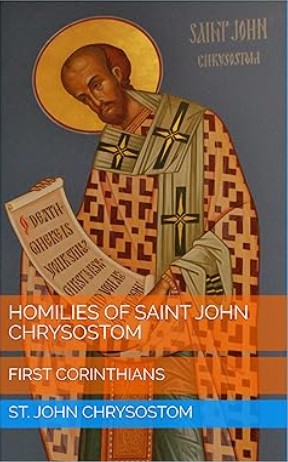
Homilies of Saint John Chrysostom: First Corinthians
Paul’s first letter to the Corinthians wrestles with issues that remain pressing today—division, pride, sexual ethics, the Lord’s Supper, and the meaning of love. Preached in the late fourth century to the Christians of Antioch, Chrysostom’s homilies offer both historical insight and enduring pastoral wisdom. His words cut through cultural distance with astonishing relevance, exposing the heart of Paul’s message to the Church in every age. This updated edition preserves the theological depth of the original English translation while presenting it in a form suitable for modern readers. It’s an essential resource for anyone who wants to hear the golden voice of the early Church expound the Apostle’s call to holiness, love, and unity.
-
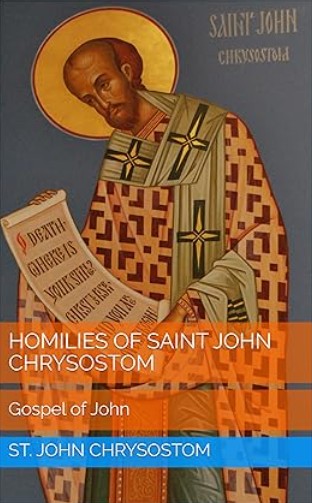
Homilies of Saint John Chrysostom: John
John Chrysostom (c. 349–407), one of the greatest preachers of the early church, delivered these homilies in Antioch and Constantinople. His exposition of the Gospel of John blends theological insight with pastoral application, revealing how the early church understood and proclaimed this Gospel. This edition retains the substance of the original NPNF translation while bringing the English into a contemporary register. The result is a faithful, approachable version of Chrysostom’s work that is suitable for both serious study and devotional reading.
This answer was generated on 2026-09-17 using a retrieval-augmented generation (RAG) system built on Appian Way Press's own translations and revisions of early Christian writings, with the gemini-2.5-flash language model producing the final answer text from the retrieved passages.