What did Basil think of the Holy Spirit's divinity?
Saint Basil firmly believed in the full divinity of the Holy Spirit, affirming the Spirit's consubstantiality and equality with the Father and the Son.
Basil, in Select Works and Letters of Saint Basil, states, "What I said about the Son—that we must acknowledge His true Person—I must also say about the Holy Spirit." He clarifies that the Spirit is a distinct Person, not the same as the Father, citing Scripture that says, "God is a Spirit." Nor is the Spirit the same Person as the Son, as indicated by the passage, "If anyone does not have the Spirit of Christ, he does not belong to Him.… Christ is in you." Basil explains that this passage demonstrates "their close relationship in nature, not a confusion of Persons." He further describes the Spirit as "full and complete, not a part of another, but whole and perfect in Himself."
Basil's commitment to this doctrine is highlighted in Select Works and Letters of Saint Basil, where it is noted that he felt "compelled to speak on this subject" (the Holy Spirit) with "careful thoroughness," repeating "what I have received" as teaching. He urged his audience "not to focus on hearing what pleases you, but on what pleases the Lord, what agrees with Scripture, and what does not contradict the Fathers."
In Select Works and Letters of Saint Basil, Basil explicitly advises believers to "avoid arguing over the doctrine of the Father, Son, and Holy Spirit, but instead believe in and confess the uncreated and consubstantial Trinity." He considered it "necessary to include a clear explanation of the true faith about the Father, the Son, and the Holy Spirit."
Gregory Nazianzen, in his Funeral Oration on the Great St. Basil, corroborates Basil's view, stating that Basil recognized "one glory of the Father, the equality of the Only-begotten, and one glory of the Son, that of the Spirit." Gregory further explains Basil's position: "We believe that to subordinate any one of the Three is to destroy the whole. We worship and acknowledge them as Three in their distinct properties but One in their divine nature."
Hermias Sozomen, in A History of the Church in Nine Books, directly confirms Basil's stance, noting that during a period of intense debate over "whether the Holy Spirit is consubstantial with the Father and the Son or not," Basil, along with Apollinarius and Athanasius, "strongly supported" the teaching that the Holy Spirit is consubstantial with the Father and the Son. The fact that Basil's "orthodoxy regarding the Deity of the Holy Spirit" was challenged, as mentioned in Gregory Nazianzen's Ep. LVIII To Basil, further underscores his prominent and firm defense of the Spirit's divinity.
Works Cited in This Issue
-
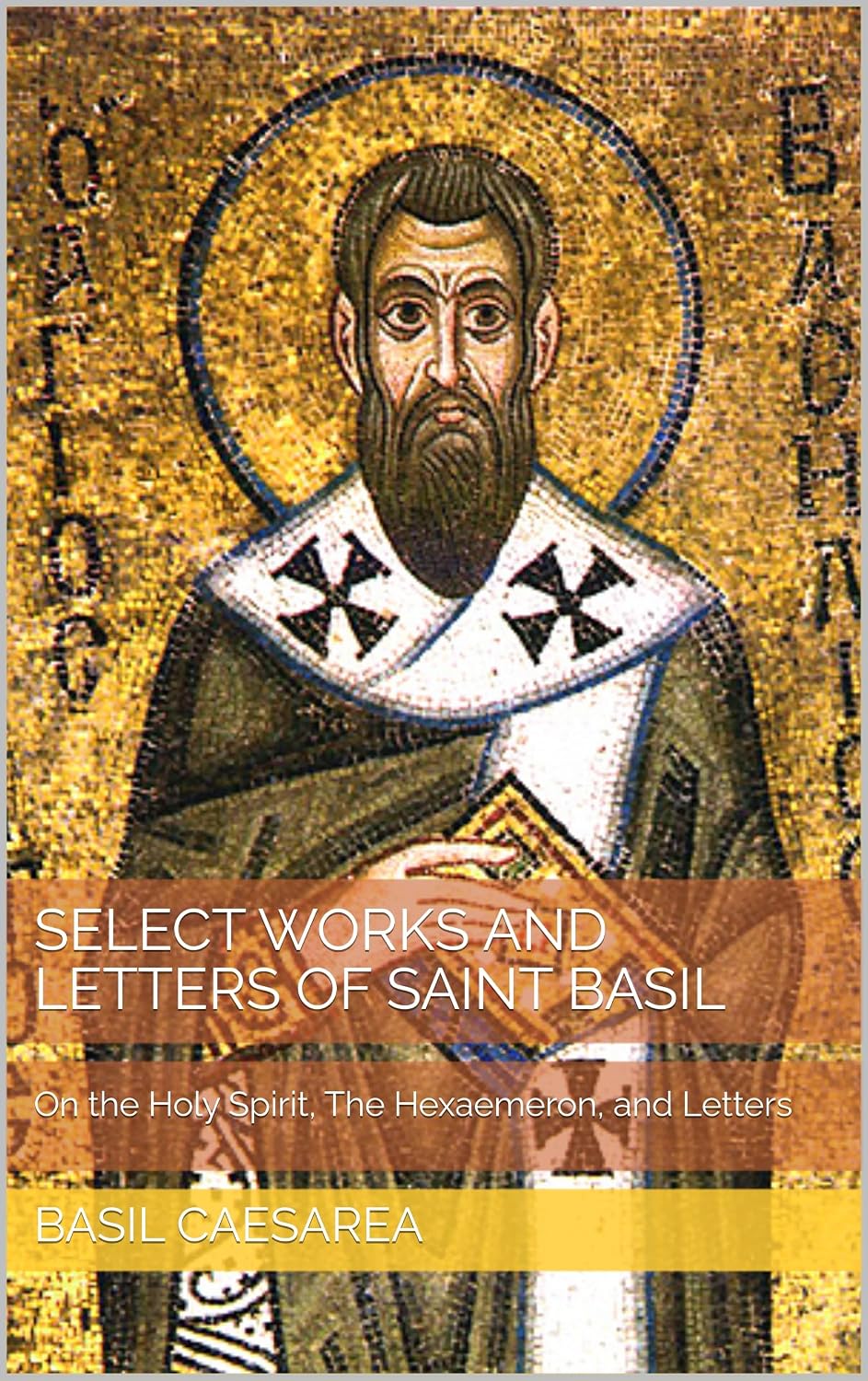
Select Works and Letters of Saint Basil
Saint Basil of Caesarea, a key figure in fourth-century Christianity, was a theologian, bishop, and pastor whose writings profoundly influenced Nicene theology and the Christian understanding of the Trinity. His works include a robust defense of the divinity of the Holy Spirit and thoughtful teachings on faith, worship, holiness, and discipleship. Beyond theological debate, Basil addressed practical aspects of Christian life such as wealth, generosity, morality, and community discipline through his homilies and ascetic writings. His extensive correspondence offers valuable insights into the challenges faced by the early church amid theological controversies and pastoral responsibilities. This volume presents a modernized selection of Basil’s writings, making his profound theological and pastoral contributions accessible to contemporary readers interested in early church history, Trinitarian doctrine, and Christian asceticism.
-
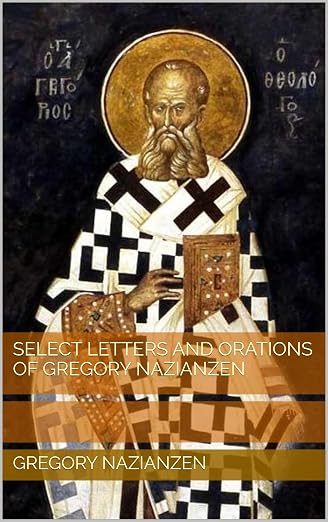
Select Letters and Orations of Gregory Nazianzen
Select Letters and Orations of Gregory Nazianzen offers an insightful glimpse into the theological, ecclesiastical, and pastoral challenges facing the fourth-century Church during a time of intense doctrinal development and controversy. As one of the Cappadocian Fathers and a pivotal figure in defending Nicene Trinitarian theology, Gregory’s writings address the complexities of articulating the nature of the Father, Son, and Holy Spirit in the aftermath of the Council of Nicaea. His celebrated Five Theological Orations explore the divinity of the Son and the Spirit while emphasizing the importance of scriptural interpretation, Christian confession, and worship in shaping theology. The included letters complement these orations by revealing Gregory’s personal experiences, relationships, and leadership struggles within the broader ecclesiastical context. This modern edition, preserving the historic Nicene and Post-Nicene Fathers translation, remains an essential resource for understanding the development of early Christian doctrine and the historical Church.
-
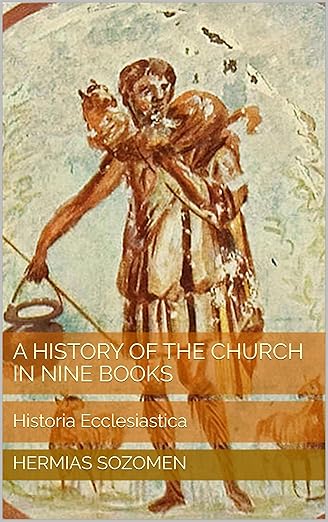
A History of the Church in Nine Books: Historia Ecclesiastica
Hermias Sozomen’s *Historia Ecclesiastica*, written in the fifth century, offers a vital and detailed account of the Christian Church’s transformation during the fourth century, spanning the reigns of Constantine to Theodosius I. This classic ecclesiastical history explores key theological controversies such as the Arian debate following the Council of Nicaea, while illuminating the roles of influential bishops, emperors, monks, and missionaries who shaped early Christianity. Sozomen’s work is particularly valued for its unique preservation of historical details and traditions not found in other sources, especially concerning monasticism. Presented here in a modernized English edition, the text maintains the original’s substance and character while updating spelling, punctuation, and formatting for contemporary readers. Whether approached by scholars, pastors, or history enthusiasts, this edition remains an indispensable resource for understanding the complex religious and political developments of late antiquity.
This answer was generated on 2026-10-11 using a retrieval-augmented generation (RAG) system built on Appian Way Press's own translations and revisions of early Christian writings, with the gemini-2.5-flash language model producing the final answer text from the retrieved passages.