What did Athanasius think of the term homoousios?
Athanasius was a strong proponent and defender of the term homoousios, viewing it as a vital safeguard for Christian faith and doctrine.
According to the Prolegomena to Select Works of Athanasius, "The theology of Athanasius and the West aligns with the Nicene formula in its original sense," which centrally emphasized "The inseparable Unity of the God of Revelation." The Nicene definition, which included homoousios, "emphasized the Unity of the Godhead in Three Persons, opposing the Arian division of the Son from the Father."
Athanasius defended the use of non-scriptural terms like homoousios. The Introduction to De Decretis explains that Athanasius argued the council was "forced to use them because of the Arians’ evasions" and that "these terms do not express any idea absent from Scripture." He further supported their use by demonstrating that "these terms were already in use in the Church," citing figures like Theognostus, the two Dionysii, and Origen.
Athanasius possessed "deep insight" into the term's future importance, as noted by Saint Cyril of Jerusalem in Catechetical Lectures. Cyril states that Athanasius foresaw "that this word would eventually overcome all opposition and be embraced by the Universal Church as the true safeguard of the Christian faith." While Athanasius recognized the theological difficulties and objections, such as Paul of Samosata's argument that "If Christ is Ὁμοούσιος with the Father, then three subsistences (οὐσίοι) must be accepted—one original substance (the Father), and two more recent ones (the Son and the Spirit)," he also showed a conciliatory spirit towards "brothers who mean what we mean and only argue about the word."
The Prolegomena to Select Works of Athanasius also notes that Athanasius made a "distinction between ὁμοούσιος and μονοούσιος," though the author of the Prolegomena considers this distinction to lack "real meaning." In his later years, Athanasius believed that "the title ‘Son’ was enough to affirm the Trinity of Persons," stating, “‘By the name Father we refute Arius; by the name Son we overthrow Sabellius.’” This suggests that while homoousios was crucial for precision against heresy, the fundamental truth of the Son's relationship to the Father could also be affirmed through scriptural titles.
Works Cited in This Issue
-
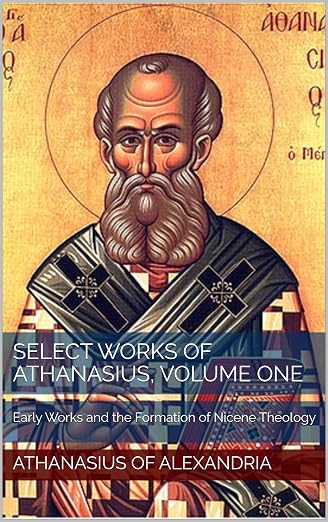
Select Works of Athanasius, Volume One: Early Works and the Formation of Nicene Theology
This volume presents the foundational theological writings of Athanasius of Alexandria, a pivotal figure in defending the Nicene faith against Arianism. It includes his earliest and most influential works, such as *Against the Heathen* and *On the Incarnation*, as well as key documents from the Arian controversy and the Council of Nicaea. The collection highlights Athanasius’ central themes, including the eternal divinity of Christ, the significance of the Incarnation, and the preservation of apostolic doctrine. Carefully revised for modern readability while maintaining historical accuracy, the volume situates Athanasius within the complex theological debates of the fourth-century Church. This essential resource offers valuable insight for students, theologians, and readers interested in the development of Christian doctrine and the enduring impact of Athanasius’ thought.
-
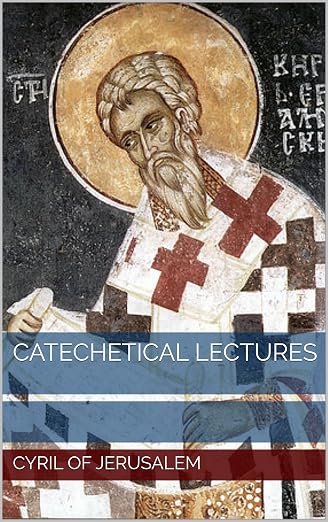
Catechetical Lectures
Cyril of Jerusalem’s Catechetical Lectures provide a comprehensive fourth-century guide to Christian doctrine, baptism, worship, and the life of the Church, originally delivered to catechumens and newly baptized believers in Jerusalem. The collection includes eighteen lectures covering core Christian teachings such as the Trinity, incarnation, resurrection, and eternal life, followed by five mystagogical lectures that explain the rites of baptism, chrism, and the Eucharist. These writings offer valuable insights into early Christian theology, liturgical practices, and the creed specific to the Jerusalem church during a formative period marked by theological controversies and the development of orthodox Trinitarian doctrine. Beyond their theological content, the lectures serve as an important historical testimony to the baptismal and Eucharistic practices of the early Church. This modern edition, revised through an AI-assisted editorial process, preserves the classic English translations along with introductions and notes, making this pivotal witness to early Christianity accessible to contemporary readers.
This answer was generated on 2026-09-16 using a retrieval-augmented generation (RAG) system built on Appian Way Press's own translations and revisions of early Christian writings, with the Google Gemini language model producing the final answer text from the retrieved passages.