How does Justin Martyr use John 1 in his writing?
Justin Martyr extensively uses the concept of the Logos, drawn from what Athanasius, in Select Works of Athanasius, Volume One: Early Works and the Formation of Nicene Theology, identifies as an "Apostolic (Johannine) title of the Savior." Justin applies this concept to Jesus Christ, identifying him as the divine Word. In his First Apology for Christians to Antoninus the Pious, Justin states that "Jesus Christ alone was born uniquely as the Son of God, being his Logos, firstborn and power; and by his will he became man." He further clarifies that "The Word of God is his Son," and that this Word "is also called angel and apostle."
Justin Martyr employs the Logos concept to explain various aspects of divine revelation and Christ's nature and role:
- Divine Manifestation: He connects the Word to the divine figure who appeared in the Old Testament, noting that "the angel of God spoke to Moses in the flame of fire from the bush, and said: I am the one who is, the God of Abraham, the God of Isaac, the God of Jacob, the God of your fathers." This implies the pre-incarnate Word as the speaker.
- Prophetic Inspiration: Justin suggests that the prophets were inspired by the divine Word, stating, "And you, I suppose, will say that the prophets are inspired by no one else but by the divine Word."
- Incarnation: He explains that "it is right to understand the Spirit and the power from God as nothing else but the Word, who is also the firstborn of God," and that "this Word, coming upon the virgin and overshadowing her, not through sexual union but through power, made her pregnant."
- Revelation of the Father: Justin links the Word to Jesus' teaching about knowing God, citing Jesus' words: "No one knows the Father except the Son; nor the Son except the Father, and those to whom the Son reveals him." He also connects the Word to Jesus' statement, "Whoever hears me hears the one who sent me."
Athanasius, in Select Works of Athanasius, Volume One: Early Works and the Formation of Nicene Theology, observes that Apologists like Justin "attach to an Apostolic (Johannine) title of the Savior a set of Alexandrian associations: they nearly transform the Word of St. John into the Logos of Philo and the Eclectics." Athanasius notes that "the Logos, who is given in part to the philosophers, is fully revealed in His divine Person in Christ," and that Justin "goes further than others" in this regard. While affirming that "Justin was no Arian," Athanasius suggests that the Apologists' approach, including Justin's, led to an unconscious separation of the Incarnate Son from the Eternal Father, resulting in "not God (ὁ ὅντως θεός) but a subordinate divine being is revealed in Christ."
Works Cited in This Issue
-
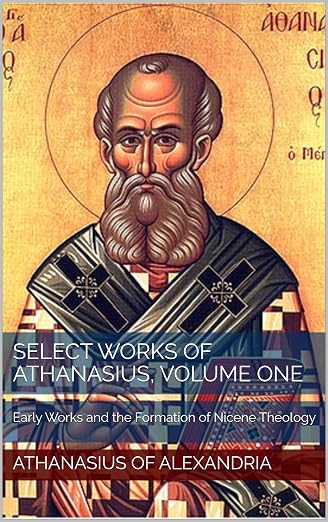
Select Works of Athanasius, Volume One: Early Works and the Formation of Nicene Theology
This volume presents the foundational theological writings of Athanasius of Alexandria, a pivotal figure in defending the Nicene faith against Arianism. It includes his earliest and most influential works, such as *Against the Heathen* and *On the Incarnation*, as well as key documents from the Arian controversy and the Council of Nicaea. The collection highlights Athanasius’ central themes, including the eternal divinity of Christ, the significance of the Incarnation, and the preservation of apostolic doctrine. Carefully revised for modern readability while maintaining historical accuracy, the volume situates Athanasius within the complex theological debates of the fourth-century Church. This essential resource offers valuable insight for students, theologians, and readers interested in the development of Christian doctrine and the enduring impact of Athanasius’ thought.
-
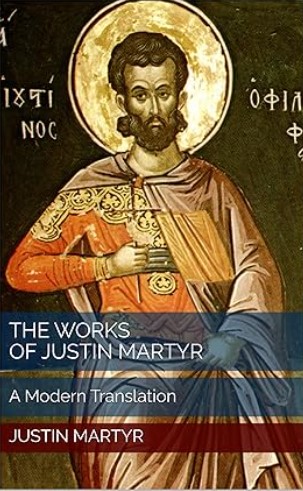
The Works of Justin Martyr: A Modern Translation
Justin Martyr (c. 100–165) was among the earliest Christian authors to engage directly and systematically with Greco-Roman philosophy, Jewish interpretation of Scripture, and Roman political authority. Writing as a philosopher-convert, Justin sought to explain and defend Christianity as the true fulfillment of reason, Scripture, and monotheistic belief. His works stand at the beginning of Christian apologetic literature and exerted lasting influence on later theology. This edition includes Discourse to the Greeks, Exhortatory Discourse to the Greeks, On Monarchy, First Apology, Second Apology, and the Dialogue with Trypho. Together, these writings address pagan critics, Jewish interlocutors, and imperial officials, offering insight into how early Christians articulated their faith in a pluralistic and often hostile environment. While modern scholarship has questioned the authorship of some shorter treatises, they are presented here as they have been historically transmitted under Justin’s name.
This answer was generated on 2026-09-25 using a retrieval-augmented generation (RAG) system built on Appian Way Press's own translations and revisions of early Christian writings, with the gemini-2.5-flash language model producing the final answer text from the retrieved passages.