Advent Week Four, Thursday
Advent Week Four: Promise Taking Flesh. For years when Advent week four runs longer.
Morning
Galatians 3:1–14 Berean Standard Bible
1O foolish Galatians! Who has bewitched you? Before your very eyes Jesus Christ was clearly portrayed as crucified. 2I would like to learn just one thing from you: Did you receive the Spirit by works of the law, or by hearing with faith?
3Are you so foolish? After starting in the Spirit, are you now finishing in the flesh? 4Have you suffered so much for nothing, if it really was for nothing? 5Does God lavish His Spirit on you and work miracles among you because you practice the law, or because you hear and believe?
6So also, “Abraham believed God, and it was credited to him as righteousness.” 7Understand, then, that those who have faith are sons of Abraham. 8The Scripture foresaw that God would justify the Gentiles by faith, and foretold the gospel to Abraham: “All nations will be blessed through you.” 9So those who have faith are blessed along with Abraham, the man of faith.
10All who rely on works of the law are under a curse. For it is written: “Cursed is everyone who does not continue to do everything written in the Book of the Law.” 11Now it is clear that no one is justified before God by the law, because, “The righteous will live by faith.” 12The law, however, is not based on faith; on the contrary, “The man who does these things will live by them.”
13Christ redeemed us from the curse of the law by becoming a curse for us. For it is written: “Cursed is everyone who is hung on a tree.” 14He redeemed us in order that the blessing promised to Abraham would come to the Gentiles in Christ Jesus, so that by faith we might receive the promise of the Spirit.
Galatians 3:1-14 begins with a sharp question: after receiving the Spirit, are the Galatians trying to finish by their own effort? Paul points them back to Jesus Christ crucified and asks them to remember how God began his work among them. The question reaches into this morning, too. When a task feels unfinished, do you turn first to the promise God has given, or to the proof you hope to offer?
Paul calls up Abraham, who believed God and received righteousness. The promise to Abraham reaches beyond what any one person can see: all nations will be blessed through him. Paul says those who have faith share that blessing. Their place in the promise rests on God’s word, received in faith. The Galatians began by hearing and believing; now they are tempted to treat the Spirit as a first installment, with their own performance responsible for the rest.
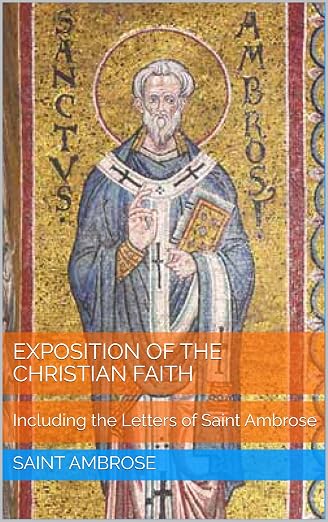
Ambrose considers Paul’s hard claim that Christ became a curse for us. In Sermon Against Auxentius on Giving Up the Basilicas, he says of Christ that “He who in His flesh took on our flesh, in His body carried our weaknesses and curses, so that He might destroy them; for He was not cursed Himself, but was cursed in our place.” The curse is real, and Christ bears it. Paul sets this costly act at the center of the promise: blessing comes to the nations through Christ, and the Spirit is received by faith. We do not finish what Christ has done by adding our own claim to worthiness.
This presses on the small ways we try to earn what has been given. You may prepare carefully for a meeting, then treat its outcome as a verdict on whether you deserve God’s favor. Or you may meet a failure and hurry to compensate with extra effort, as if God’s promise depended on your recovery. Paul directs the Galatians back to what they heard and believed. Your work matters; it is simply not the price of the Spirit.
As you enter the day, notice where you are straining to secure what God has promised. Name the burden plainly, then begin the next task as someone who has received a gift. Christ has borne the curse; the promise extends beyond your sight, and God gives the Spirit through faith. Let that be the ground beneath your effort, rather than the reward you hope to win.
Evening
Revelation 21:22–22:5 Berean Standard Bible
22But I saw no temple in the city, because the Lord God Almighty and the Lamb are its temple. 23And the city has no need of sun or moon to shine on it, because the glory of God illuminates the city, and the Lamb is its lamp. 24By its light the nations will walk, and into it the kings of the earth will bring their glory. 25Its gates will never be shut at the end of the day, because there will be no night there.
26And into the city will be brought the glory and honor of the nations. 27But nothing unclean will ever enter it, nor anyone who practices an abomination or a lie, but only those whose names are written in the Lamb’s Book of Life.
22:1Then the angel showed me a river of the water of life, as clear as crystal, flowing from the throne of God and of the Lamb 2down the middle of the main street of the city. On either side of the river stood a tree of life, bearing twelve kinds of fruit and yielding a fresh crop for each month. And the leaves of the tree are for the healing of the nations.
3No longer will there be any curse. The throne of God and of the Lamb will be within the city, and His servants will worship Him. 4They will see His face, and His name will be on their foreheads. 5There will be no more night in the city, and they will have no need for the light of a lamp or of the sun. For the Lord God will shine on them, and they will reign forever and ever.
At the end of the day, Revelation 21:22-22:5 turns our eyes toward a city lit from its center. There is no temple because God and the Lamb are its temple; there is no sun because God’s glory gives its light. The promise is larger than any lamp-lit room we know. John sees a river clear as crystal, a tree bearing fruit, and leaves for the healing of the nations. The city’s brightness is life flowing outward.
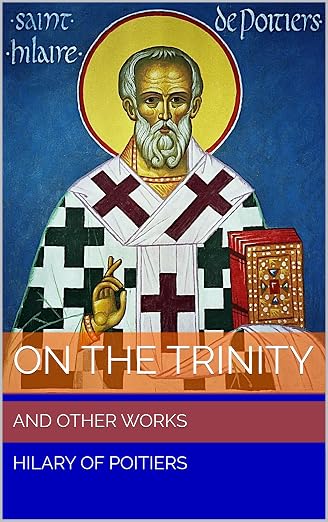
Hilary writes in Homilies on the Psalms, “Not one of the words spoken by God will fail or fall.” He points to the tree’s leaves as health for the nations, taking their healing as part of what God has promised. The vision gives that promise a place and a picture: the river runs down the city’s street, and the tree stands beside it, bearing fruit month after month. Healing belongs to the future God shows John, even for nations whose wounds have marked the world.
The gates remain open because night has ended. Kings bring their glory into the city; the honor of the nations enters with them. The open gates are not an image of a careless welcome. John also sees what cannot enter: uncleanness, abomination, falsehood. The vision holds welcome and judgment together. Its light gathers the nations, and its purity sets a boundary against the lie.
That boundary reaches into the life we have just lived. A lie can look small beside a vision of nations and kings: an account polished to protect our pride, a truth bent to keep someone’s trust. Yet the city’s light exposes what falsehood hides. The tree’s leaves heal the nations; the city excludes those who practice a lie. Both belong to the same vision. Its healing is no permission to carry deception into God’s presence, and its judgment is no flaw in the promise of healing.
John sees servants who behold God’s face, with God’s name on their foreheads. Their life comes from the throne, and their work is worship. The vision asks for more than admiration from a distance; it asks what can live in that light. As you look back over this day, what in you needs healing, and what falsehood would you need to put away to be at home in that city?
Works Cited
A language model (gpt-6-luna) wrote this prose in repeated rounds with human review and direction, from passages found in Appian Way Press's editions of early Christian writings. Rick Brannan then reviewed it. Bible text: Berean Standard Bible. How this devotional was made, and how you may share it.