Wednesday, 9 December
Advent Week Two: Make a Way for the Coming King
Morning
Isaiah 6:1–13 Berean Standard Bible
1In the year that King Uzziah died, I saw the Lord seated on a throne, high and exalted; and the train of His robe filled the temple. 2Above Him stood seraphim, each having six wings: With two wings they covered their faces, with two they covered their feet, and with two they were flying. 3And they were calling out to one another:
“Holy, holy, holy is the LORD of Hosts;
all the earth is full of His glory.”
4At the sound of their voices the doorposts and thresholds shook, and the temple was filled with smoke.
5Then I said:
“Woe is me,
for I am ruined,
because I am a man of unclean lips
dwelling among a people of unclean lips;
for my eyes have seen the King,
the LORD of Hosts.”
6Then one of the seraphim flew to me, and in his hand was a glowing coal that he had taken with tongs from the altar. 7And with it he touched my mouth and said:
“Now that this has touched your lips,
your iniquity is removed
and your sin is atoned for.”
8Then I heard the voice of the Lord saying:
“Whom shall I send?
Who will go for Us?”
And I said:
“Here am I. Send me!”
9And He replied:
“Go and tell this people,
‘Be ever hearing, but never understanding;
be ever seeing, but never perceiving.’
10Make the hearts of this people calloused;
deafen their ears and close their eyes.
Otherwise they might see with their eyes,
hear with their ears,
understand with their hearts,
and turn and be healed.”
11Then I asked:
“How long, O Lord?”
And He replied:
“Until the cities lie ruined
and without inhabitant,
until the houses are left unoccupied
and the land is desolate and ravaged,
12until the LORD has driven men far away
and the land is utterly forsaken.
13And though a tenth remains in the land,
it will be burned again.
As the terebinth and oak leave stumps when felled,
so the holy seed will be a stump in the land.”
Isaiah’s vision begins in the year King Uzziah dies. The prophet looks from a vacant earthly throne to the Lord seated high above him. Seraphim cover their faces; the temple shakes and fills with smoke. The song of God’s holiness leaves Isaiah no distance from what he sees: his own lips, and the lips of the people among whom he lives, are unclean. Before he can speak for the King, he must face what his speech has become.
Isaiah says, “Woe is me.” He does not begin by volunteering or explaining himself. He names his ruin. His mouth matters because the King will send him to speak, and the people’s lips belong to the same confession. John Chrysostom, reflecting on Jesus’ use of Isaiah’s words, writes, “So they brought this loss upon themselves by shutting their ears, closing their eyes, and hardening their hearts.” Isaiah will meet hearers who shut themselves against his message. The danger begins before he reaches them: a mouth can speak among people who refuse to hear, and a heart can grow hard while the lips keep moving.
Then a seraph touches Isaiah’s mouth with a coal from the altar. The cleansing is given to him; he does not reach for it or claim it. The message he hears is precise: his guilt is removed and his sin atoned for. Only after that touch does the Lord ask whom to send. Isaiah’s answer, “Here am I,” comes from a man who has been cleansed, not from one who thinks his words are already fit for the King.
The commission is severe. Isaiah must tell the people to hear without understanding and see without perceiving. He asks how long, and receives an answer of ruined cities, emptied houses, and a land left desolate. The vision offers no promise that his speaking will turn the people or spare the land. He is sent because the King has called him, with the hard message still before him.
Go into this day with the order of Isaiah’s calling in view: first the coal, then the voice that sends. Before one conversation, notice what your lips are ready to do. If you are about to answer sharply, pause and ask God to cleanse that speech before it leaves your mouth. Then speak the truth you have been given, even when you cannot control whether anyone receives it.
Evening
Matthew 23:1–12 Berean Standard Bible
1Then Jesus spoke to the crowds and to His disciples: 2“The scribes and Pharisees sit in Moses’ seat. 3So practice and observe everything they tell you. But do not do what they do, for they do not practice what they preach. 4They tie up heavy, burdensome loads and lay them on men’s shoulders, but they themselves are not willing to lift a finger to move them.
5All their deeds are done for men to see. They broaden their phylacteries and lengthen their tassels. 6They love the places of honor at banquets, the chief seats in the synagogues, 7the greetings in the marketplaces, and the title of ‘Rabbi’ by which they are addressed.
8But you are not to be called ‘Rabbi,’ for you have one Teacher, and you are all brothers. 9And do not call anyone on earth your father, for you have one Father, who is in heaven. 10Nor are you to be called instructors, for you have one Instructor, the Christ. 11The greatest among you shall be your servant. 12For whoever exalts himself will be humbled, and whoever humbles himself will be exalted.
At the close of the day, Matthew 23:1-12 leaves a searching distinction: the crowd is to heed the teachers’ words, yet not copy their lives. Their teaching may point beyond them to God; their hunger for recognition points back to themselves. Jesus names the places and greetings they cherish, then turns the disciples toward service. The question reaches into your own day: when you did what was right, whose notice mattered to you?
The rebuke is precise. The teachers lay burdens on others and refuse to lift a finger; their public devotion wins attention while their conduct fails to carry its weight. Jesus does not tell the crowd to discard every word they teach. He shows how easily truth can travel through a life that contradicts it. That should unsettle anyone who has offered sound advice while leaving someone else to bear the cost of it.
Then Jesus addresses the desire beneath the show: to be greeted, honored, and called by a title that sets one person above others. He points the disciples to their one Teacher and Father, and calls them brothers. John Chrysostom writes, “He not only forbids setting one’s heart on the first place but also commands pursuing the last.” The last place, in this reading, is more than a station to endure when praise goes elsewhere. It is a place to seek.
That turns humility from an appearance into a choice about what you do when no one applauds. You may have spent the day wanting your work noticed, resenting a colleague who received credit, or waiting for someone to thank you. Jesus’ words bring that desire into view without softening the rebuke. The way down is not a claim that you have no worth; it is a willingness to serve without using service to climb.
Before sleep, choose one act of service that will remain unseen: prepare what someone else needs, clear away a task you did not create, or send help without drawing attention to yourself. Let the act stand without a claim for recognition. When you look back on today, whose notice were you working for?
Works Cited
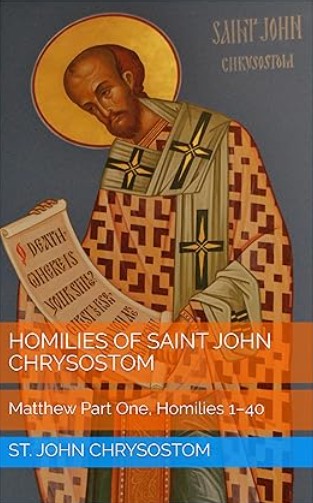
A language model (gpt-6-luna) wrote this prose in repeated rounds with human review and direction, from passages found in Appian Way Press's editions of early Christian writings. Rick Brannan then reviewed it. Bible text: Berean Standard Bible. How this devotional was made, and how you may share it.