Wednesday, 2 December
Advent Week One: Keeping Watch in Hope
Morning
Isaiah 2:1–11 Berean Standard Bible
1This is the message that was revealed to Isaiah son of Amoz concerning Judah and Jerusalem:
2In the last days the mountain of the house of the LORD
will be established as the chief of the mountains;
it will be raised above the hills,
and all nations will stream to it.
3And many peoples will come and say:
“Come, let us go up to the mountain of the LORD,
to the house of the God of Jacob.
He will teach us His ways
so that we may walk in His paths.”
For the law will go forth from Zion,
and the word of the LORD from Jerusalem.
4Then He will judge between the nations
and arbitrate for many peoples.
They will beat their swords into plowshares
and their spears into pruning hooks.
Nation will no longer take up the sword against nation,
nor train anymore for war.
5Come, O house of Jacob,
let us walk in the light of the LORD.
6For You have abandoned Your people,
the house of Jacob,
because they are filled
with influences from the east;
they are soothsayers like the Philistines;
they strike hands with the children of foreigners.
7Their land is full of silver and gold,
with no limit to their treasures;
their land is full of horses,
with no limit to their chariots.
8Their land is full of idols;
they bow down to the work of their hands,
to what their fingers have made.
9So mankind is brought low,
and man is humbled —
do not forgive them!
10Go into the rocks
and hide in the dust
from the terror of the LORD
and the splendor of His majesty.
11The proud look of man will be humbled,
and the loftiness of men brought low;
the LORD alone will be exalted in that day.
Isaiah’s vision begins with movement: peoples from many nations stream toward the mountain of the Lord to learn his ways. They come seeking instruction, and the word goes out from Jerusalem to judge and settle disputes. The result is concrete: swords become tools for tending the earth, and nations stop training for war. Then Isaiah turns to the house of Jacob. Its silver, horses, and idols crowd the land. The people who should walk in God’s light have filled their hands with what cannot teach them peace.
That turn keeps the vision from becoming a distant picture to admire. The nations are coming to learn, while God’s own people are busy trusting their wealth, military strength, and handmade gods. Isaiah’s summons presses on the present: the house of Jacob must walk in the light now, even as the prophet names its failure. Waiting for God’s peace does not excuse the habits that contradict it.
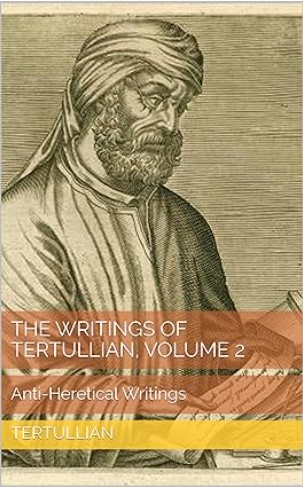
Tertullian reads the transformation of weapons as a change in conduct: people “will turn harmful intentions, hostile words, and all kinds of evil and blasphemy into peaceful and moderate pursuits.” His words bring Isaiah’s tools close to hand. A weapon may be a sharp reply rehearsed before a difficult conversation, or a habit of speaking about a neighbor as an enemy. To walk toward God’s mountain is to let his teaching reshape what we do with our words.
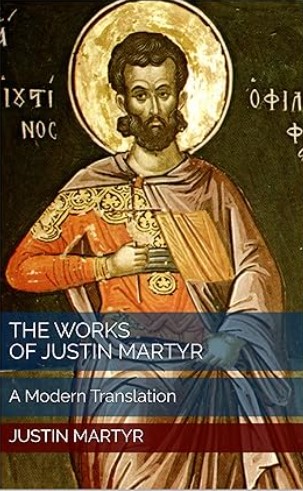
Justin Martyr describes people changed by the gospel: “those who were once mutual murderers not only did not fight their enemies, but gladly, confessing Christ, died rather than lie or deceive those who questioned them.” The costly contrast matters. Peace reaches beyond avoiding a fight; it changes what a person will do even under pressure. Isaiah’s vision gives that change a direction: toward the Lord, whose judgment teaches nations to lay down the means of harming one another.
The same passage that shows nations learning peace also exposes the house filled with silver, horses, and idols, then declares that human pride will be brought low (Isaiah 2:1-11). Carry that exposure into the day. Notice one weapon you are ready to use—a cutting phrase, a practiced suspicion, a refusal to hear—and lay it down. Let the Lord’s instruction govern your next response, so your steps begin to match the peace you are waiting for.
Evening
1 Thessalonians 2:13–20 Berean Standard Bible
13And we continually thank God because, when you received the word of God that you heard from us, you accepted it not as the word of men, but as it truly is, the word of God, which is also now at work in you who believe.
14For you, brothers, became imitators of the churches of God in Judea that are in Christ Jesus. You suffered from your own countrymen the very things they suffered from the Jews, 15who killed both the Lord Jesus and their own prophets and drove us out as well. They are displeasing to God and hostile to all men, 16hindering us from telling the Gentiles how they may be saved. As a result, they continue to heap up their sins to full capacity; the utmost wrath has come upon them.
17Brothers, although we were torn away from you for a short time (in person, not in heart), our desire to see you face to face was even more intense. 18For we wanted to come to you — indeed I, Paul, tried again and again — but Satan obstructed us. 19After all, who is our hope, our joy, our crown of boasting, if it is not you yourselves in the presence of our Lord Jesus at His coming? 20You are indeed our glory and our joy.
At evening, 1 Thessalonians 2:13-20 sets a painful distance before us. The Thessalonians have received God’s word, and it is at work in them; still, they suffer at the hands of their own people. Paul longs to see them, tries again and again, and remains blocked. The word bears fruit in a place of suffering, while the one who brought it cannot reach them. Both facts stand together.
Augustine writes in On the Predestination of the Saints, “So God works in human hearts through that calling according to his purpose, which we have talked about at length, so that they do not hear the gospel in vain.” Paul’s gratitude rests on this work within the Thessalonians. Their suffering does not make the word powerless, and their endurance is not proof that their pain is small. God is at work in people who have received his word, even while the messenger is kept away.
Paul does not soften what has happened. He says they became like the churches in Judea, suffering from their own countrymen. He speaks of those who killed the Lord Jesus and the prophets and drove the apostles out, and he names their hostility to the gospel. This is a severe account of opposition, not a passing inconvenience. The Thessalonians must endure it without seeing Paul face to face. Their faithfulness is lived under pressure, with no easy access to the person who longs to encourage them.
Then Paul tells them what the distance cannot erase: he wants to see them intensely. He has tried repeatedly to come, and Satan has obstructed him. The words do not explain away the separation. They let us hear how much it costs him. Yet Paul can still name the Thessalonians his hope, joy, and crown of boasting in the presence of Jesus at his coming. His love reaches toward a future meeting when his present attempts have failed.
As the day ends, think of someone you are kept from helping or seeing. Perhaps your message has gone unanswered, or circumstances have closed the way to a needed conversation. Paul’s longing does not turn into indifference when the road is blocked. He holds these believers before the Lord’s coming, where he expects to stand with them. What hope can you hold for the person you cannot reach tonight?
Works Cited

A language model (gpt-6-luna) wrote this prose in repeated rounds with human review and direction, from passages found in Appian Way Press's editions of early Christian writings. Rick Brannan then reviewed it. Bible text: Berean Standard Bible. How this devotional was made, and how you may share it.