Writings of Eusebius
Books in this Series (5)
-
The History of the Church: Historia Ecclesiastica
Eusebius of Caesarea’s History of the Church (Historia Ecclesiastica) is the earliest surviving account of Christianity’s growth from a persecuted sect to an empire-wide faith. Written in the early fourth century, this monumental work draws from scripture, state records, personal letters, and now-lost sources to capture the church’s first three hundred years. This translation was prepared through an AI-assisted process, combining digital tools with traditional editorial work.
-
The Preparation for the Gospel: Praeperatio Evangelica
In this monumental early church apologetic, Eusebius systematically dismantles the contradictions and moral failings of Greco-Roman polytheism. Drawing deeply on the Hebrew Scriptures, he demonstrates how divine wisdom and providence have been unfolding throughout history to prepare humanity for the revelation of Jesus Christ. Rather than rejecting classical philosophy outright, Eusebius engages with it critically, highlighting its highest ideals as pointers toward the fullness of Christian truth. This work stands as a bridge between pagan philosophy and Christian theology, showing how early Christians used reason, history, and prophecy to defend and explain their faith. This translation was prepared through an AI-assisted process, combining digital tools with traditional editorial work.
-
The Proof of the Gospel: Demonstratio Evangelica
The Proof of the Gospel (Demonstratio Evangelica) is Eusebius’s theological masterwork: a thorough and systematic presentation of Christianity as the fulfillment of both Jewish prophecy and Greek philosophical longing. Writing from his position as bishop of Caesarea, Eusebius argues that the life, death, and resurrection of Jesus were not an innovation, but the long-anticipated climax of divine revelation. This translation was prepared through an AI-assisted process, combining digital tools with traditional editorial work.
-
On Ecclesiastical Theology: περὶ τῆς ἐκκλησιαστικῆς θεολογίας
On Ecclesiastical Theology offers a rare glimpse into the foundational theological conflicts that shaped the early church’s understanding of God, the Logos, and Christ’s divine nature. Written during a time of intense doctrinal struggle, Eusebius provides a systematic defense of Nicene orthodoxy, engaging with alternative teachings and heresies that threatened the unity of Christian belief. This translation was prepared through an AI-assisted process, combining digital tools with traditional editorial work.
-
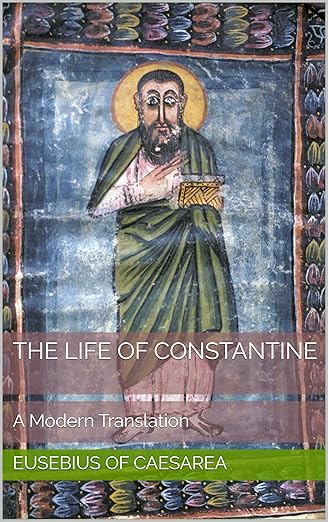
Life of Constantine: A Modern Translation
Eusebius of Caesarea’s Life of Constantine is a foundational historical work that offers a firsthand account of the first Christian emperor and the transformative period of Christianity in the fourth century. Written shortly after Constantine’s death, the text blends biography with theological interpretation, portraying the emperor as a divinely chosen figure who ended persecution and established peace for the Christian church. This modern English translation preserves the original’s rhetorical power while clarifying archaic language, making it accessible to contemporary readers. The work includes valuable imperial letters, speeches, and religious legislation, providing unique insights into Constantine’s reign, the Council of Nicaea, and the rise of Christianity as an imperial faith. Ideal for students, historians, and theologians, the volume serves as an essential resource for understanding early Christian history and the close relationship between empire and faith. This revision was prepared through an AI-assisted process, combining digital tools with traditional editorial work.