Saint Augustine
20 title(s) in catalog
-
Anti-Donatist Writings: Writings in connection with the Donatist Controversy
This modernized edition brings together Augustine’s three anti-Donatist writings, presenting his most extended engagement with the Donatist controversy in clear, contemporary English for students, pastors, and readers of historical theology. The Donatist controversy arose in the aftermath of the Diocletianic persecutions and centered on the question of whether the moral failure of clergy invalidated the sacraments they administered. From this dispute emerged a lasting schism, with Donatist communities claiming to represent a pure church set apart from a compromised wider communion. Augustine’s response addresses these claims directly and at length. This revision was prepared through an AI-assisted process, combining digital tools with traditional editorial work.
-
Anti-Manichaean Writings: Writings in connection with the Manichaean Controversy
These writings arise from Augustine’s long and personal involvement with Manichaeism, a movement he followed for years before his conversion to Catholic Christianity. As a result, his critique is shaped not only by formal theological argument, but also by an intimate knowledge of the system’s internal logic, moral claims, and intellectual appeal. Across these treatises, Augustine confronts the Manichaean vision of the world as a conflict between coeternal principles of light and darkness. He defends the unity and goodness of the Creator, the integrity of the material world, and the coherence of the biblical account of creation, while developing a sustained reflection on the nature of evil, human will, and moral responsibility. This revision was prepared through an AI-assisted process, combining digital tools with traditional editorial work.
-
Anti-Pelagian Writings, Volume One: Original Sin, Nature, and Grace
When Pelagius began teaching that human beings possess the natural ability to live righteously without the special grace of God, his ideas quickly sparked debate across the Christian world. Augustine of Hippo emerged as the most important theological voice responding to these claims, arguing that the Pelagian view underestimated the depth of human sin and misunderstood the necessity of divine grace. The treatises collected in this volume represent the early stage of Augustine’s response to Pelagian teaching. In them, he develops arguments that would become foundational for Western Christian theology: that humanity shares in the fallen condition of Adam, that the law cannot produce righteousness apart from the Spirit, and that salvation depends entirely on the grace of God given through Jesus Christ. This revision was prepared through an AI-assisted process, combining digital tools with traditional editorial work.
-

Anti-Pelagian Writings, Volume Two: Grace, Free Will, and Predestination
By the time these works were written, the Pelagian controversy had moved beyond its earliest debates. Augustine had already defended the reality of original sin and the necessity of divine grace. Now new questions pressed in from every side. If grace is necessary for salvation, what role remains for human choice? Why do some believe while others do not? And why do some who begin the Christian life fall away while others persevere to the end? In these later anti-Pelagian writings, Augustine confronts those questions directly. On Marriage and Concupiscence addresses the relationship between the goodness of marriage and the fallen condition of human desire. A Treatise on the Soul and its Origin explores difficult questions about human nature and the transmission of sin. A Treatise against Two Letters of the Pelagians answers critics who sought to dismantle Augustine’s theology of grace. The remaining works present Augustine’s mature reflection on grace and salvation. In A Treatise on Grace and Free Will and A Treatise on Rebuke and Grace, Augustine explains how divine grace enables rather than destroys human freedom. Finally, A Treatise on the Predestination of the Saints and A Treatise on the Gift of Perseverance examine why faith itself must be understood as a gift of God and why perseverance in the Christian life ultimately depends on divine grace. This revision was prepared through an AI-assisted process, combining digital tools with traditional editorial work.
-

The City of God, Volume One: The Refutation of Pagan Religion (Books 1–10)
Written in the aftermath of Rome’s fall, Augustine’s City of God confronts the charge that Christianity was responsible for the empire’s decline and exposes the theological emptiness of pagan religion. In the first ten books of The City of God, Augustine addresses one of the central accusations of his age: that the abandonment of the traditional gods had brought disaster upon Rome. With historical argument, theological reasoning, and sharp rhetorical skill, he demonstrates that Rome’s gods neither preserved the city from calamity nor provided moral transformation or true happiness to their worshipers. This revision was prepared through an AI-assisted process, combining digital tools with traditional editorial work.
-

The City of God, Volume Two: The Origin, History, and Destiny of the Two Cities (Books 11–22)
In the second half of The City of God, Augustine moves beyond refutation to construct one of the most influential Christian interpretations of history ever written. Following his critique of pagan religion in the opening books, Augustine turns in Books 11–22 to a positive exposition of Christian doctrine. He traces the origin of the two cities—the City of God and the earthly city—to the beginning of creation, locating their division not in political structures but in the fundamental orientation of love toward God or toward self. Augustine develops this vision across the sweep of history. He reflects on the fall of angels and humans, the nature of death and sin, and the role of Christ as the true mediator. Sacred history is set alongside secular history, as the people of God move through time within, not apart from, the rise and fall of earthly powers. This revision was prepared through an AI-assisted process, combining digital tools with traditional editorial work.
-

The Confessions: A Modern Translation
Written as a prayer addressed to God, the Confessions recounts Augustine’s journey from youthful ambition and moral struggle through philosophical searching and finally to Christian faith. Along the way, Augustine reflects on memory, desire, sin, grace, and the restless human longing for truth. His story culminates in his conversion at Milan, yet the work reaches beyond autobiography into sustained theological reflection. The later books of the Confessions move beyond narrative to explore themes such as memory, time, and the interpretation of Genesis. These reflections reveal Augustine not only as a penitent believer, but as a profound biblical theologian whose thought would shape Christian doctrine for centuries. The work also provides essential context for Augustine’s later writings on grace, human will, and divine sovereignty. This revision was prepared through an AI-assisted process, combining digital tools with traditional editorial work.
-
Doctrinal and Moral Writings: The Enchiridion and Other Treatises
At the heart of this volume stands The Enchiridion, Augustine’s enduring handbook of Christian teaching, organized around the theological virtues of faith, hope, and love. Written to provide a clear and compact guide to what Christians are to believe and how they are to live, it has shaped theological instruction for centuries. Several of the included treatises focus on the formation of new believers and the nature of belief itself. On the Catechising of the Uninstructed offers practical guidance on how to explain the faith with clarity and pastoral sensitivity. Treatise on Faith and the Creed and On the Creed: A Sermon to the Catechumens unfold the articles of the Creed as a framework for understanding the central claims of Christian confession. In Concerning Faith of Things Not Seen and On the Profit of Believing, Augustine reflects on trust, testimony, and authority, showing how faith and reason work together in the pursuit of truth. This revision was prepared through an AI-assisted process, combining digital tools with traditional editorial work.
-
Exegesis of the Gospels: Sermon on the Mount and Harmony of the Gospels
In his commentary on the Sermon on the Mount, Augustine works methodically through Matthew 5–7, treating the text not as a collection of isolated sayings but as a coherent whole. He explores the moral vision of the sermon, the formation of Christian virtue, and the relationship between outward obedience and inward transformation. The result is a sustained reflection on the shape of the Christian life grounded in the teaching of Jesus. In The Harmony of the Gospels, Augustine turns to a different but related task. Confronted with variations among the Gospel accounts, he examines questions of order, detail, and emphasis, seeking to show how the evangelists may be read together without contradiction. Rather than erasing differences, he accounts for them, arguing that each Gospel contributes to a unified and trustworthy witness to the life of Christ. This revision was prepared through an AI-assisted process, combining digital tools with traditional editorial work.
-
Homilies on the Gospels
These sermons differ in tone and purpose from Augustine’s formal theological treatises. Here he speaks as a pastor addressing a gathered congregation, moving directly through Gospel texts and drawing out their meaning for daily life. His aim is not only to explain, but to persuade—to call his hearers to repentance, to strengthen their faith, and to guide them in the practice of Christian virtue. Across these homilies, Augustine returns again and again to central themes: the necessity of humility before God, the danger of pride, and the primacy of love as the fulfillment of the law. The person of Christ stands at the center of his preaching, not only as teacher but as the one in whom salvation is found. The result is exposition that is at once theological, moral, and deeply practical. At the same time, these sermons offer insight into Augustine’s interpretive approach. He reads the Gospels as a unified witness, frequently connecting passages and drawing out their broader significance. His use of figurative interpretation appears alongside more direct explanation, all directed toward helping his hearers understand and live out the text. This revision was prepared through an AI-assisted process, combining digital tools with traditional editorial work.
-
Homilies on the First Epistle of John
Augustine’s Homilies on the First Epistle of John offer a sustained meditation on one of the New Testament’s most profound and searching texts. Preached to ordinary believers, these homilies unfold the apostle John’s teaching on love—not as mere sentiment, but as the defining mark of true Christian faith and life. Again and again, Augustine presses the connection between loving God and loving one’s neighbor, exposing false assurances while offering genuine comfort to those who walk in the light. This revision was prepared through an AI-assisted process, combining digital tools with traditional editorial work.
-
Homilies on the Gospel of John, Volume One: John 1–5
Homilies on the Gospel of John, Volume One: John 1–5 presents the beginning of Augustine’s extended exposition of the Fourth Gospel. Preached to a living congregation, these homilies move from the theological heights of “In the beginning was the Word” into the unfolding revelation of Christ in his early ministry. Augustine does not merely explain the text—he presses its meaning upon his hearers, urging them to believe, to understand, and to live accordingly. Readers will encounter Augustine’s sustained engagement with central Johannine themes: the eternal Word, the incarnation, the nature of belief and unbelief, and the significance of Christ’s signs. His pastoral voice is clear throughout—probing, instructing, and encouraging those who would hear the Gospel rightly. This revision was prepared through an AI-assisted process, combining digital tools with traditional editorial work.
-
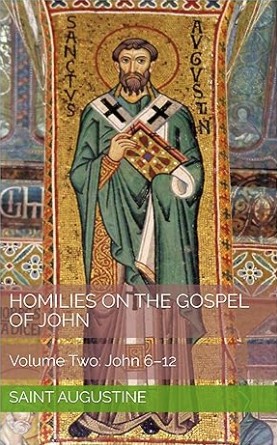
Homilies on the Gospel of John, Volume Two: John 6–12
Homilies on the Gospel of John, Volume Two: John 6–12 continues Augustine’s extended exposition of the Fourth Gospel, carrying the reader into some of its most theologically rich and pastorally significant chapters. Here Augustine expounds Christ’s declaration as the Bread of Life, the response of belief and unbelief among the crowds, and the mounting conflict that surrounds Jesus’ public teaching. This edition is a careful revision of the classic translation found in the Nicene and Post-Nicene Fathers, Series 1, Volume 7. Archaic expressions have been updated and sentence structures smoothed for modern readability, while preserving the substance, pastoral force, and theological depth of Augustine’s preaching. This revision was prepared through an AI-assisted process, combining digital tools with traditional editorial work.
-
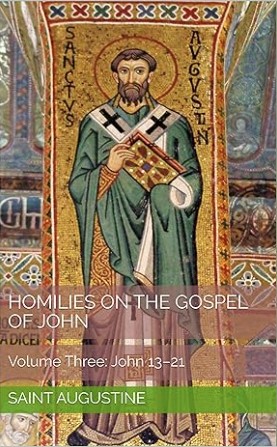
Homilies on the Gospel of John, Volume Three: John 13–21
Homilies on the Gospel of John, Volume Three: John 13–21 brings Augustine’s monumental exposition of the Fourth Gospel to its conclusion. Here the public ministry of Christ gives way to the intimacy of the Upper Room, the sorrow and triumph of the passion, and the joy of the resurrection. Augustine guides his hearers through some of the most theologically profound and pastorally searching chapters in all of Scripture. This edition is a careful revision of the classic translation found in the Nicene and Post-Nicene Fathers, Series 1, Volume 7. Archaic language has been updated and sentence structures smoothed for modern readability, while preserving the theological depth, pastoral force, and rhetorical cadence of Augustine’s preaching. This revision was prepared through an AI-assisted process, combining digital tools with traditional editorial work.
-
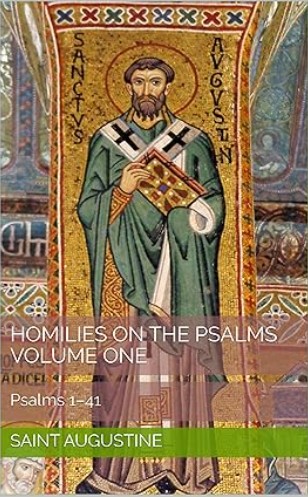
Homilies on the Psalms, Volume One: Psalms 1–41
Augustine’s Homilies on the Psalms stands among the most significant works of patristic biblical interpretation. In these sermons, the Psalms are not treated merely as ancient poetry, but as the living prayer book of the Church—the voice of Christ, the voice of the believer, and the voice of the people of God across the ages. This first volume opens with some of the most foundational psalms in Scripture. Readers will encounter Augustine’s reflections on Psalm 1, with its contrast between the righteous and the wicked; Psalm 2, with its royal and messianic themes; Psalm 8, with its meditation on humanity and divine majesty; and the beloved Psalm 23, where Augustine expounds the Lord’s shepherding care. Throughout, psalms of lament, confidence, and praise become occasions for profound pastoral instruction and theological reflection. This revision was prepared through an AI-assisted process, combining digital tools with traditional editorial work.
-
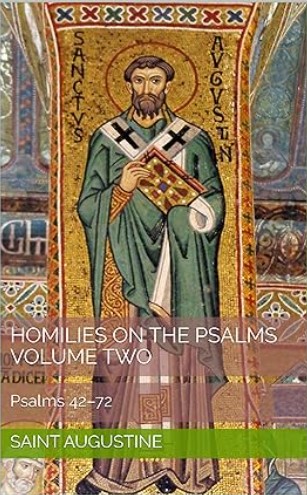
Homilies on the Psalms, Volume Two: Psalms 42–72
Augustine’s Homilies on the Psalms remains one of the most significant works of patristic biblical interpretation. In these sermons, the Psalms are not treated merely as ancient poetry, but as the living prayer book of the Church—the voice of Christ, the voice of the believer, and the voice of the people of God across the ages. This second volume includes some of the most spiritually and theologically rich psalms in Scripture. Readers will encounter Augustine’s reflections on Psalm 42, with its profound longing for God; Psalm 50, one of the great penitential psalms of the Christian tradition; and Psalm 72, with its royal and messianic themes pointing toward the reign of Christ. Throughout, psalms of lament, confession, trust, and praise become occasions for profound pastoral instruction and theological reflection. This revision was prepared through an AI-assisted process, combining digital tools with traditional editorial work.
-
Homilies on the Psalms, Volume Three: Psalms 73–106
Augustine’s Homilies on the Psalms remains one of the most significant works of patristic biblical interpretation. In these sermons, the Psalms are not treated merely as ancient poetry, but as the living prayer book of the Church—the voice of Christ, the voice of the believer, and the voice of the people of God across the ages. This third volume includes some of the most searching theological psalms in Scripture. Readers will encounter Augustine’s reflections on Psalm 73, with its enduring question of why the wicked prosper; Psalm 90, with its meditation on human frailty and divine eternity; and the great historical psalms, where Augustine traces the faithfulness of God through the history of his people. Throughout, psalms of lament, remembrance, trust, and praise become occasions for profound pastoral instruction and theological reflection. This revision was prepared through an AI-assisted process, combining digital tools with traditional editorial work.
-
Homilies on the Psalms, Volume Four: Psalms 107–150
Augustine’s Homilies on the Psalms remains one of the most significant works of patristic biblical interpretation. In these sermons, the Psalms are not treated merely as ancient poetry, but as the living prayer book of the Church—the voice of Christ, the voice of the believer, and the voice of the people of God across the ages. This final volume includes some of the most beloved and climactic psalms in Scripture. Readers will encounter Augustine’s reflections on the Songs of Ascents, where the Church is portrayed as a pilgrim people journeying toward the heavenly city; Psalm 119, with its sustained meditation on the law and word of God; and the final hymns of praise culminating in Psalm 150. Throughout, psalms of thanksgiving, worship, wisdom, and triumph become occasions for profound pastoral instruction and theological reflection. This revision was prepared through an AI-assisted process, combining digital tools with traditional editorial work.
-

The Letters of Saint Augustine: A Modern Translation
Written over the course of several decades, Augustine’s letters address a remarkable range of theological, pastoral, and personal concerns. In them, Augustine responds to doctrinal controversies, offers spiritual counsel, adjudicates ecclesiastical disputes, and reflects on Scripture and Christian life. Together, the letters provide an unparalleled portrait of the church in late antiquity and of Augustine’s role within it. This volume presents a modernized revision of the English translation published in the Nicene and Post-Nicene Fathers series. While the NPNF translation has long been valued for its accuracy, its nineteenth-century language and syntax can be difficult for modern readers. This revision updates vocabulary, clarifies sentence structure, and removes unnecessary archaisms, while remaining faithful to the content and theological precision of the original translation. This revision was prepared through an AI-assisted process, combining digital tools with traditional editorial work.
-
On the Trinity: de Trinitate
Written over many years, On the Trinity represents Augustine’s most sustained effort to articulate the Christian confession of one God in three persons. The early books focus on the biblical foundations of Trinitarian doctrine, examining key passages that address the unity and distinction of the Father, Son, and Holy Spirit within the life and teaching of the Church. In the later books, Augustine turns to a series of analogies drawn from human experience, especially from the operations of the mind, memory, understanding, and love. These reflections are offered not as solutions to the mystery of God, but as disciplined ways of thinking that lead the reader toward greater theological depth and humility. This revision was prepared through an AI-assisted process, combining digital tools with traditional editorial work.